

- All
- Aquatics
- Awards
- Biking
- Camp Staff
- Camping
- Conservation & Environment
- COPE/Climbing
- Cub Scouting
- Fishing
- National Jamboree
- National Outdoor Conference
- NCAP
- Outdoor Ethics/Leave No Trace
- Properties
- Range & Target Activities
- Safety
- Shooting Sports
- Sponsored Content
- Wheels & Board Sports
Camping
Join us in the heart of the rugged Southwest at Philmont for the 2025 National Outdoor Conference—the ultimate gathering for Scouters and outdoor enthusiasts! Whether you’re looking to level up your skills, get inspired by top speakers, or simply connect with like-minded adventurers, this biennial event is the place to be.
Where: 📍 Philmont Training Center, Cimarron, NM
When: 📅 September 17-21, 2025
🌟 Conference Highlights:
- Dynamic workshops and hands-on training to elevate your outdoor programs
- Inspiring keynotes from leaders in the outdoor industry
- Networking opportunities with Scouters and outdoor pros from across the country
- A firsthand look at the latest in gear, gadgets, and innovations
Don’t miss this chance to discover new ideas, sharpen your skills, and share in the excitement of the great outdoors with fellow Scouters. Stay tuned for updates on registration, class offerings, lodging, and more!
Be sure to sign up on the 2025 National Outdoor Conference website to receive email alerts—let the countdown to adventure begin!
NCAP
Hey Camp Leadership!
You know those post-camp and pre-camp inspections we go through every year? Well, they’re not just paperwork. They’re our golden ticket to making sure our camps are top-notch for the Scouts.
Post-camp/Pre-camp Inspection Checklists (430-310) stand as essential tools in ensuring the safety, functionality, and improvement of Scouting facilities (see NCAP Standard FA-701). They serve not only as a checklist for immediate repairs but also as an incredibly useful tool for making capital improvement decisions, laying the groundwork for enhancing the Scouting experience.
Think of it like this: these inspections aren’t just about checking off boxes. They’re like our roadmap for making strategic upgrades and improvements. And guess what? Getting some volunteers involved can turn these inspections into a real game-changer.
Let’s take a look at how we can make the most of these inspections:
Taking Stock: Let’s dive deep into how our camp performed last season. What worked? What needs fixing? From the state of our cabins to our safety protocols, let’s leave no stone unturned. Use the Pre-Camp/Post-Camp inspection form to help guide you through this discussion. The document is meant to help you take a strategic look at the property and the programs at your camp. It will help you plan any maintenance and upgrades or upkeep that camp needs to be ready to open.
Get Lots of People Involved: We’ve got some smart, dedicated people, on our council committees, right? Well, let’s put their heads together. By getting folks from facilities, finance, and program development on board, we can tap into a wealth of knowledge to figure out our next steps. Take them with you to camp and have them walk through the area with you as they will see things that you do not. Invite folks who have never been to camp as well as they will bring a fresh perspective on the walkthrough.
Use the Right Tools: Leverage Scouting America’s Camp Facility Evaluation tool as another tool in this inspection. It’s like our camp-improvement GPS. By using this tool, we’re gathering hard data to steer our decisions. No more flying blind—this tool helps us focus our efforts where they’ll have the biggest impact.
Now, onto the real work:
Spotting Opportunities: Armed with our inspection findings and committee input, it’s time to figure out our action plan. Whether it’s sprucing up our infrastructure or beefing up our safety measures, let’s pinpoint our targets.
Making a Game Plan: Let’s rally some volunteers and map out our strategy. With input from our committees, we’re setting priorities and deadlines. Budgets, timelines, you name it—we’re getting it all sorted. Collaborating with your committees and the council staff helps to build a plan that everyone can agree on and that meets the objectives of the council.
Putting Our Money Where Our Mouth Is: We’re working hand-in-hand with the finance committee to make sure the cash is flowing where it’s needed most. If we need to do a little fundraising to meet the need this team needs to be involved.
Keeping Tabs on Progress: We’ve got our plan locked in—now it’s all about execution. We’re keeping a close eye on things, making tweaks as needed, and celebrating wins along the way. Communicate to your units who are coming as you make these improvements or upgrades to keep the excitement going about the upcoming season.
In a nutshell, by teaming up for post-camp inspections and getting strategic with our planning, we’re setting ourselves up for success. Let’s keep the campfire burning bright!
Camping
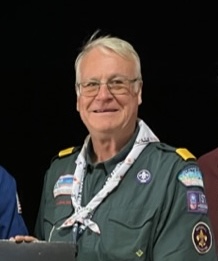
As Scouting America continues to strengthen its outdoor experiences, leadership plays a vital role in shaping the programs and properties that inspire the next generation. We recently sat down with Scott Anderson the newly appointed Chair of the Outdoor Programs and Properties Committee, to learn more about his vision, priorities, and passion for the outdoors.
Q&A with Scott Anderson, Chair of the Outdoor Programs and Properties Committee
Q: What inspired you to take on this leadership role within Scouting America?
A: I am the product of a strong Scouting unit program, and I know firsthand the impact that great leadership and a strong outdoor program can have on young people. Scouting gave me opportunities to explore nature, challenge myself, and learn to lead, each of these experiences that shaped who I am today. Taking on this role is a way to give back and help ensure that every youth in Scouting America has the same opportunity to get outdoors, have fun, and develop confidence and leadership through real experiences.
Q: The Outdoor Programs and Properties Committee covers a wide range of responsibilities. How do you describe the mission of the committee?
A: Our mission is to support our councils and the variety of outdoor programs that Scouting uses to deliver its values-based leadership experience for youth, and to make sure those programs are delivered safely and sustainably across our properties. The committee brings together experienced volunteers and subject matter experts to help Scouting stay relevant, inspiring, and focused on developing young people of character and leadership.
Q: What are some of your top priorities for the coming year?
A: Our priorities align closely with Scouting America’s Roadmap. We’re focused on being a leader in safeguarding youth by ensuring all our outdoor programs and properties meet the highest standards of safety and quality. We also want to change the way we work together by simplifying and streamlining the National Camp Accreditation Program to remove barriers and better support councils. At the same time, we’re working to make our outdoor programs highly relevant to today’s youth, broaden our appeal through exciting and accessible experiences, and strengthen our financial position by helping councils use their properties more efficiently and sustainably.
Q: How does the committee support local councils?
A: We support councils by connecting them with resources, expertise, and best practices for delivering safe and effective outdoor programs. Whether it’s camp operations, aquatics, range and target activities, COPE, climbing, or property management, our subcommittees and subject matter experts work collaboratively to provide guidance, training, and tools that help councils strengthen their local programs and facilities.
Q: Outdoor programs continue to evolve. How do you see Scouting adapting to the interests of today’s youth?
A: Today’s youth are seeking adventure, relevance, and purpose. Scouting’s outdoor program is uniquely positioned to meet those needs by blending traditional outdoor skills with modern learning opportunities, including high-adventure activities, STEM integration, and outdoor leadership experiences. We’re also focusing on accessibility, ensuring that every youth, regardless of background, has the chance to experience the fun, challenge, and personal growth that come from being outdoors.
Q: What role do volunteers play in advancing the committee’s goals?
A: Volunteers are the backbone of this effort. Each subcommittee is led by dedicated Scouting volunteers with proven leadership and expertise in their fields. They work closely with subject matter experts to shape and deliver the best possible outdoor experiences. Our volunteers make it possible to translate national vision into local impact ensuring that every youth member benefits from safe, meaningful, and fun outdoor adventures.
Q: What excites you most about the future of outdoor programs and properties in Scouting America?
A: What excites me most is the potential to reimagine the outdoor experience for a new generation. We have an opportunity to make Scouting’s outdoor programs more accessible, more innovative, and more connected to what motivates youth today. By investing in our properties and expanding program options, we can ensure that the outdoors remains the foundation for leadership development and lifelong learning in Scouting America.
Q: How can others get involved or support the work of the committee?
A: There are many ways to get involved – from serving on a council or district committee, to becoming a Short-Term Camp Administrator, a Distinguished Conservation Service Award advisor, or part of an NCAP Area Camp Assessment Team. Professionals and educators can also share their expertise in areas like safety, sustainability, and program design. Most importantly, everyone can help by getting Scouts outdoors! Every hike, campout, and service project helps build young people who care about their world and can go on to lead lives of impact and purpose.
Closing Thoughts
As Scott takes on the role of Chair, it’s clear that the future of Scouting America’s outdoor programs and properties is in capable hands. His leadership brings a renewed focus on innovation, sustainability, and collaboration which will ensure that every Scout has a place to explore, learn, and grow.
Safety
As camp leaders, it’s imperative to recognize the growing mental health challenges faced by young adults, particularly those aged 18 to 25 – the demographic that comprises a significant portion of our camp staff. Recent data from the JED Foundation indicates that 36.2% of individuals in this age group have experienced a mental, behavioral, or emotional health issue in the past year, a notable increase from previous years.
In response to this pressing concern, Scouting America’s health and safety team, working alongside the Outdoor Programs team, has developed Mental, Emotional, and Social Health (MESH) training materials for camp staff. These resources are specifically designed to equip camp staff with the knowledge and skills necessary to support both peers and campers effectively within their skillset. The training teaches the U-S-A Model to help our staff Understand the behaviors to watch for, Speak to Scouts and provide Support and to Act and Advocate for Scouts. The session is written so that it is easily delivered by the Camp Director or Camp Program Director or Health Officer.
Implementing this training may be a part of your plan to meet the National Camp Accreditation Program (NCAP) standard RP-551, which emphasizes the importance of council committees providing support to camp staff.
You can find these materials on the Camp Director Resource Page. By integrating this training into your staff development programs, you not only enhance the well-being of your team but also foster a safer, more supportive environment for all camp participants.
Prioritizing mental health is an important part of our support of Scouts and staff. By proactively addressing these challenges through dedicated training and support, we can make a profound difference in the lives of those we serve.
National Jamboree
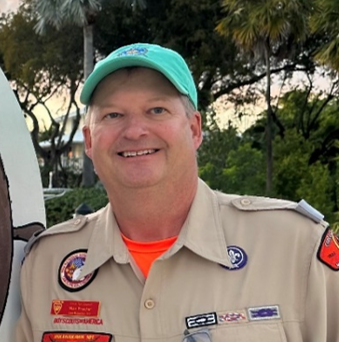
We are thrilled to announce the selection of Michael “Mike” Prachar as a Senior Program Administrative Specialist within the Outdoor Programs and Properties department beginning July 1, 2024. In this role, Mike will serve as the Associate Director of the National Jamboree.
As Associate Director of the National Jamboree, Mike will bring his expertise to support the development, administration, and management of a successful National Jamboree. In addition to his work with the National Jamboree, Mike will work alongside several national outdoor programs and properties subcommittees to support their efforts in delivering safe and impactful outdoor programs to youth across the nation.
Mike began his Scouting career in the Mecklenburg County Council as a district executive, and has since served as a district director, field director, Assistant Scout Executive, and Director of Support Services throughout Scouting including councils in North Carolina, South Carolina, and Maryland. Most recently, Mike has served as the Director of Support Services in the Circle Ten Council in Dallas Texas managing the council’s outdoor programs and properties extensive camping operations.
With Mike’s history of excelling under leadership in various councils and managing various teams, we are confident in his ability to make significant contributions to the success of the National Jamboree and other assigned opportunities within the Outdoor Programs and Properties department. His dedication to empowering volunteers and staff to create dynamic Scouting programs aligns perfectly with our mission and values.
Please join us in extending a warm welcome to Mike Prachar. We look forward to his contributions and collaboration as we continue to serve our Scouting community with excellence.
Aquatics
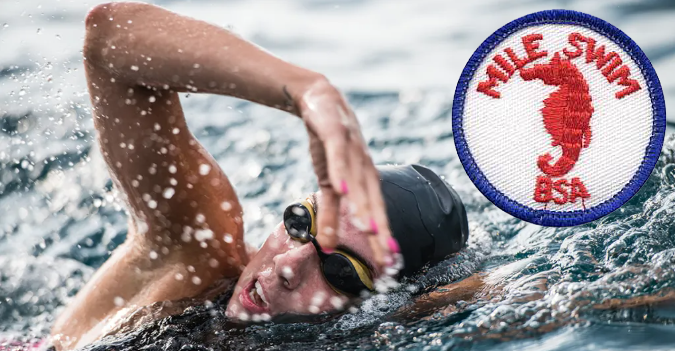
The Mile Swim Scouting America award was introduced in 1961 by Scouting America’s Health and Safety Service. The original purpose of the award was for Scouts to learn to swim a mile safely with ease. It was, and remains, a challenging recognition that contributes to fitness and safety. The last time the award requirements were updated was in 1981 when the purpose shifted from a worthwhile accomplishment promoting both safety and physical fitness to “encourage the development of physical fitness by introducing the youth to swimming as regular exercise.” Four hours of required training before swimming the mile was added as a requirement.
Drawing from feedback gathered from Scouting America Aquatics personnel at camps nationwide, the revised Mile Swim Scouting America award is refocusing on enhancing swimming stroke effectiveness and efficiency, particularly for individuals seeking improvement. Most Scouts who can walk or bike on level ground for an hour or so without stopping will likely have enough stamina to swim a mile and there are numerous other Scouts BSA programs that promote and develop regular exercise. The Mile Swim Scouting America award purpose is to build confidence and improve water competency.
UPDATED SCOUTING AMERICA Mile Swim Award Requirements:
- Successfully complete Scouting America’s swimmer test: Jump feetfirst into water over the head in depth, level off, and begin swimming. Swim 75 yards in a strong manner using one or more of the following strokes: sidestroke, breaststroke, trudgen, or crawl; then swim 25 yards using an easy, resting backstroke. The 100 yards must be completed in one swim without stops and must include at least one sharp turn.
- Learn through discussion and application how skill, stamina, stroke selection, and pace influence distance swimming.
- Pre-qualify for the mile by either swimming continuously for ¼ mile or otherwise demonstrating ability to the satisfaction of a counselor approved by the local council.
- Swim one mile under safe conditions over a course approved by the counselor supervising the swim.
Program Implementation
The revised Mile Swim Scouting America requirements are effective immediately (Spring/Summer 2024). It is recognized that many Scouting America camps will already have planned their camp summer aquatics program. Those camps may continue to present the previous (1981) version of the award program; however, all Scouting America Camps and Mile Swim Scouting America Counselors should plan on implementing the new Mile Swim Scouting America requirements for their 2025 programs. The Scouts BSA Mile Swim Emblem (SKU 245) and the Mile Swim Pocket Certificate (SKU 34394) remain unchanged. These recognition items are available at scoutshop.org. Award application and support materials can be found in the 2024 version of Scouting America Aquatics Supervision No. 34346
The Mile Swim Scouting America aquatics award is the ultimate recognition of Scouts and Leaders swimming prowess. It is hoped that this revised version of the award will encourage more Scouting America members to take the plunge and achieve this award.

Biking
May has rolled in and with it – National Bike Month, a time to celebrate the benefits of cycling. This presents a fantastic opportunity to engage Scouts in activities that promote health, environmental consciousness, and community involvement. Here are seven initiatives councils or units may undertake during National Bike Month:
Organize Bike Safety Workshops: Safety should always come first. Packs, troops, and crews can arrange workshops focusing on bike safety, covering topics like helmet usage, proper signaling, and road awareness. Collaborating with local biking organizations or police departments can enhance the credibility and effectiveness of these workshops.
Trail Maintenance Projects: National Bike Month is an excellent occasion to give back to the community. Units can coordinate trail maintenance projects, ensuring that biking trails are safe and enjoyable for all users. This not only fosters a sense of civic duty but also promotes environmental stewardship among Scouts.
Scenic Bike Rides: Explore the beauty of nature while promoting physical activity by organizing scenic bike rides. Whether it’s through local parks or along picturesque trails, these rides can be both recreational and educational, offering Scouts the chance to appreciate the outdoors while learning about conservation efforts in their area.
Cycling Merit Badge Clinics: National Bike Month provides an ideal backdrop for councils to host merit badge clinics focused on cycling. These clinics can cover the requirements for the Cycling merit badge, offering Scouts the opportunity to develop their biking skills under the guidance of experienced instructors.
Bike Safety Demonstrations: Coordinate interactive bike safety demonstrations at local schools or community events. Scouts can showcase proper biking techniques, emphasize the importance of safety gear, and engage participants in hands-on activities that promote safe cycling practices.
Environmental Awareness Campaigns: Use National Bike Month as a platform to raise awareness about environmental issues related to transportation. Councils can organize campaigns highlighting the ecological benefits of cycling, such as reduced carbon emissions and decreased traffic congestion, inspiring Scouts and community members to choose sustainable modes of transportation.
Family Bike Rodeos: Cub Scout packs can host family-friendly bike rodeos featuring skill-building activities and fun challenges for both Scouts and their families. These events can include obstacle courses, slow races, and bike decorating contests, encouraging families to bond over shared outdoor experiences while promoting biking as a healthy and enjoyable activity. The newly updated Cub Scout program launching on June 1, 2024 also includes a cycling related elective adventure for every rank!
National Bike Month offers councils & units a wealth of opportunities to engage Scouts in meaningful activities that promote health, safety, environmental awareness, and community involvement. By embracing initiatives like bike safety workshops, trail maintenance projects, and family bike rodeos, you can empower Scouts to become responsible cyclists and active stewards of their communities. Let’s pedal into National Bike Month with a commitment to promoting the joys of biking for Scouts and communities alike.
Camping
When you think of National Camping School (NCS), you may know that it prepares summer camp staff for their leadership roles at camp. While that is true, when your outdoor committee and risk management leaders attend NCS, they can gain helpful skills, insights, and knowledge about how to develop your council outdoor programs to be innovative, safe, and effective.
Here are a few examples of how the more than forty courses and twelve specialized sections can help:
- Idea Sharing and growth: In every course you will share ideas with experienced Scouters from around the country, building your network of folks with area specific knowledge.
- Qualified Instructors and Course Materials: Course instructors are deeply experienced outdoor program volunteers and professionals who volunteer their time to help you prepare for your Scouting role. Course materials are developed and regularly updated by our National Outdoor Committees to reflect standardized current practices.
- Specific: Training sections offer certification in Aquatics, Trek Leadership, Long Term/Short Term/ Day Camp Leadership, Ecology, Outdoor Skills, COPE and Climbing, and Range and Target Activities.
- Outstanding Settings: Our course sites are intentionally selected to showcase quality camping facilities around the country, at times convenient for school and camp schedules. Beyond the course content you will be able to learn from how others have solved facility, program, and business challenges.
What staff and volunteers from your council should enroll in National Camping School?
- Properties and Facilities: Before building that rifle range, dining hall, or showerhouse, NCS will help you understand program needs that affect your plans.
- Conservation Planning: Consider how existing advancement and specialized programs can be leveraged to improve your properties.
- Strategic Plan: Learn how to evaluate how your properties can/may be used before adding ideas to a strategic plan.
- Camping Committee Chair: Learn how to support your long-term, short-term, and day camp programs as they work to meet ever-increasing legal and policy requirements.
- Risk Management: Understand how programmatic requirements manage risk and keep your Scouts safe. Consider how your council is following these requirements, how Risk Managers can help, or whether you should tackle that newly proposed program.
- Program Committee: Ecology, Aquatics, Range and Target, Climbing, and Range and Target committee members can all gain program specific insights in our NCS courses.
There is still room in our 2026 courses. To find your local National Camping School or experience NCS in a different part of the country, go to https://www.scouting.org/outdoor-programs/national-camping-school/ for all the details. Email ncs@scouting.org with questions.
Is Your Camp a Showcase? Want to share it with the country as an NCS Host Camp?
Every year we look for showcase camps to host our National Camping Schools. For more information and to apply, click on the “Resources” button at the top of the NCS site OR click here to download the NCS Host Council RFP.

NCAP
The National Camp Accreditation Program (NCAP) national committee has been reorganized to meet the needs of Scouting America after the recent change from Regions and Areas to National Service Territories (NST). The National NCAP committee has taken this opportunity to restructure its entire committee and reporting structure. These changes are also reflected in the applicable standards and process required by the 2022 NCAP standards (you can check out the 2022 standards online here).
National NCAP Chair Carl Nicolaysen
National NCAP Authorization Team
Let’s start with the authorization process! Each local council completes the authorization process every five years. This authorization gives each local council the ability to operate Camp Properties, Day Camps, Short-term Camps and Long-term camps. The national NCAP committee authorization team will work with local councils who are scheduled to go through the authorization process each year. A council will be assigned a reviewer from then national authorization team and their reviewers.
Chair Steve Phillips
Vice Chair Bob Hemmerly
Team Leads John Young, Larry Healey, Don Dare, Bob Longoria, Ken Estes
National High Adventure Bases Doug McDonald
Standards and Governance
You may not know that there is group of key volunteers who support the development and implementation of our national NCAP standards. This team is responsible for the management of the development of the standards, and interpretation of the standards if questions arise. They work with all Scouting America Subject Matter Experts (SMEs) in the review and development of these standards. They also coordinate all waivers, equivalency determinations, and variance requests.
Chair Eric Hiser
Assistant Chair Rich Koch
Assistant Chair Chrystene Speed
Assessment Team
Likely the most visible part of the NCAP process and national committee, the assessment coordination process has also adjusted with the national NCAP committee’s restructuring. The NCAP assessment team leaders are assigned to a geographical zone. We utilize the term “zone” to avoid confusion with the NST volunteer structure. The NCAP zones align geographically with the NSTs. For example, zone 1 is national service territory 1, and so on. The NCAP assessments are coordinated overall by the following individuals nationally.
Chair Jack Hess
Vice Chair Barry Simays
Assessment Lead for Zones 1-8 Bob Miller
Assessment Lead for Zones 9-16 Jason Kasiorek
In addition, there are 16 Zone Assessment Coordinators who will coordinate the nationally led assessments for all long-term camps.
Zone 1 Mary Ann and Randy Price Zone 9 David Ehrlich
Zone 2 Don Paul Zone 10 Randy DeFrank
Zone 3 Cap Casperson Zone 11 John Willemain
Zone 4 Chuck Gitzen Zone 12 David Carlson
Zone 5 Brent Worley Zone 13 Jim Korcienski
Zone 6 Peter Erdely Zone 14 Bobby Bloodworth
Zone 7 Fritz Maxwell Zone 15 Jeff Irving
Zone 8 Jay Cash Zone 16 Bill Guglielmi
We are grateful for the thousands of volunteers from across Scouting America that support the NCAP process in their local council and at the national level. Questions regarding the new NCAP national committee structure? Email ncap@scouting.org.
NCAP
Scouting America’s National Camp Accreditation Program (NCAP) Declaration of Readiness (#430-072) is a critical step in ensuring that Scouting camps meet the highest standards of safety and quality. One of the key aspects of completing the Declaration of Readiness successfully is working effectively with your Zone Assessment Team. This article aims to provide guidance on how to collaborate with your team to streamline the process and navigate assessment efficiently.
Understanding Scouting America’s NCAP Declaration of Readiness
The Declaration of Readiness (#430-072) is the Council’s assurance that a camp will be ready to open and prepared to offer a program that meets or exceeds the requirements of the NCAP standards and its Authorization to Operate. The Declaration of Readiness form with its supporting documentation must be submitted to your assigned NCAP Zone Assessment Team Leader no later than May 15 each year for long-term camps. The current version of the Declaration of Readiness (#430-072) can be downloaded from Scouting America’s National Camp Accreditation Program site (scouting.org/ncap). One form is to be submitted for each type of long-term camp you will host (Cub Scout, Scouts BSA etc).
Collaborating with Your Zone Assessment Team
Establish Clear Communication Channels
Communication is key to a successful collaboration with your Zone Assessment Team. Establish clear communication channels early on, ensuring that all relevant stakeholders are) informed about the process and expectations. Regular meetings or conference calls can help keep everyone on the same page and address any questions or concerns that may arise. Share your communication preference and learn theirs – email, phone? Day of the week? Time of Day? Set communication up for success by confirming when and how is the best way to engage.
Assign Responsibilities
Clearly define roles and responsibilities within your camp team and the Zone Assessment Team. Identify who will be responsible for gathering documentation, conducting site inspections, and addressing any deficiencies found during the pre camp inspection. Having designated individuals for each task helps streamline the process and ensures accountability. This is a good way to engage your camp leadership team in the NCAP process, including helping gather the Declaration of Readiness documentation.
Provide Access to Necessary Information
Make sure your Zone Assessment Team has access to all relevant information and documentation needed to complete the assessment by submitting the documents indicated on the Declaration of Readiness form. The Declaration of Readiness form indicates what should be submitted to the Zone Assessment Team. Providing access to this information in advance allows the team to review it thoroughly and identify any areas that may need support prior to the on-site assessment. Discuss with your Zone Assessment Team what format you will be providing your documentation in. Will it be digital? Will it be in paper form? This ensures everyone is prepared to review the material.
Be Open to Feedback
Approach the Declaration of Readiness and Assessment process with an open mind and be receptive to feedback from your Zone Assessment Team. The Zone Assessment Team is dedicated to ensuring the success of your camping operation and wants to ensure you are fully prepared to start camp. Communicate frequently on items that may need additional information or may not be 100% complete.
Working effectively with your Zone Assessment Team is crucial for successfully completing the NCAP Declaration of Readiness and ultimately your NCAP annual assessment. By establishing clear communication channels, assigning responsibilities, providing access to necessary information, being open to feedback, and following up diligently, you can streamline the assessment process and ensure that your camp meets the highest standards of safety and quality.
For more information about the National Camp Accreditation Program, please review the Council Implementation Guide or visit scouting.org/ncap. To contact your Zone Assessment Coordinator, please refer to the last page of the most recent NCAP Circular for a list of e-mail addresses.

NCAP
Camp Directors have the chance to showcase the immense effort they and their staff have put into making their camp a source of pride. Each long-term camp undergoes assessment by a national team to evaluate its facilities, program, staffing and compliance with the NCAP standards. For Camp Directors, this presents an opportunity to share your camp’s story!
Running a camp isn’t just something anyone can do! It takes a dedicated team with a shared vision of success to create a memorable program. Use your NCAP assessment as an opportunity to highlight the camp’s strengths and even learn a few ways you might improve. Lead by example, showing staff that it’s not something to fear but rather a chance for the camp to shine.
The assessment team will observe camp operations, so demonstrate how the camp not only meets but exceeds the standards set by the National Camp Accreditation Program. Showcase how you uphold Scouting America’s brand with pride, while crafting a program that keeps Scouts eager to return.
Proven Preparation Tactics to Prepare for Your NCAP Assessment:
- Do not wait till the last minute to prepare your final NCAP assessment materials – have the NCAP documentation prepped and implemented before camp begins.
- Review the NCAP circulars that have been released since the last season – have you read NCAP Circular 18 and NCAP Circular 19 yet? This will ensure you understand the changes to standards and new standards/recommended practices.
- Having your camp documents ready – any outstanding items that were not reviewed during the review of your Declaration of Readiness and in subsequent pre-camp meetings with your assessment team leader and team.
- Print a copy of the camp standards at a glance for long-term camp and have it available for review by yourself and the assessment team.
- Be prepared to assist the assessment team around the camp so they can see the programs, staff, and participants. This is a great opportunity to engage additional members of your camp leadership team.
- Invite members of your council’s NCAP committee to help support the assessment team.
- Alert your camp staff that members of the assessment team might ask them questions and discuss their camp areas.
- After the assessment is completed successfully, proudly thank the camp staff and make certain everyone knows you are an NCAP Accredited Camp.
Remember – the NCAP assessment process is designed to HELP you! Don’t miss out on this opportunity to help improve your camp operation and also showcase your incredible camp and staff. Have questions about the NCAP assessment? Email NCAP@Scouting.org.
Aquatics
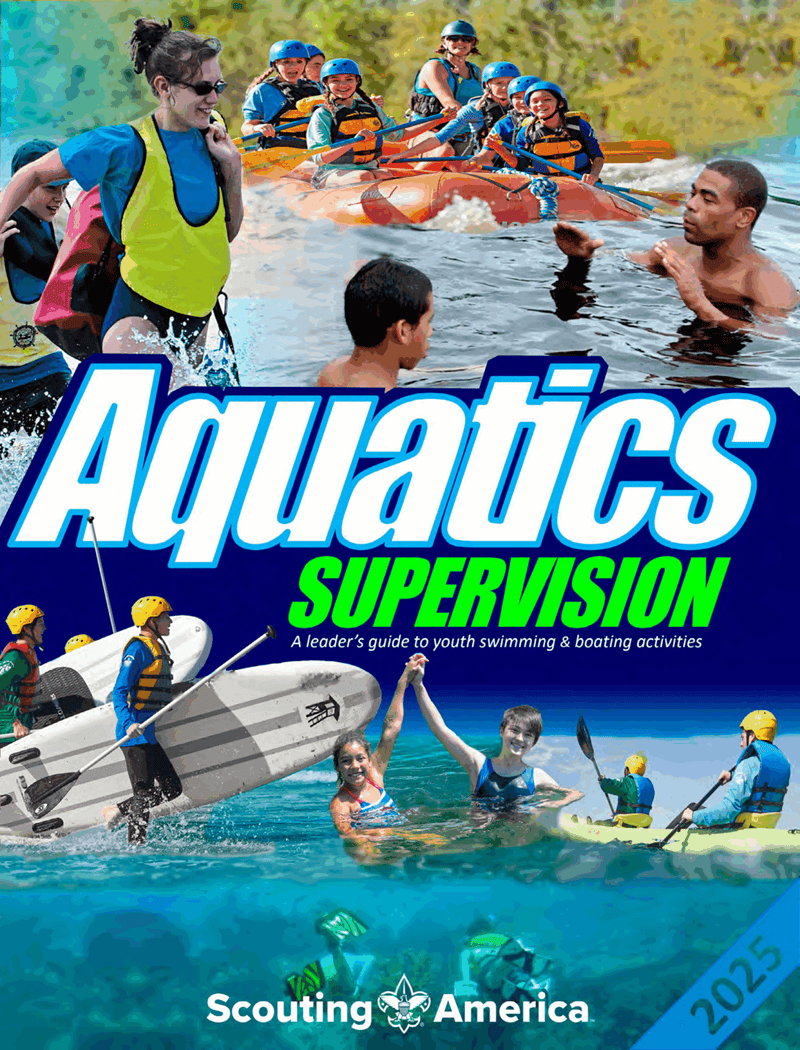
During water safety month this May, Scouting America is proud to announce the release of the newly updated Aquatics Supervision Manual, a critical resource for anyone involved in delivering safe, engaging, and high-quality aquatics programming.
Aquatic activities are a core part of the Scouting experience—from swimming and canoeing to paddleboarding and snorkeling—and ensuring they are conducted safely and effectively is essential. This revised manual reflects the most up-to-date guidance, training standards, and best practices, empowering unit leaders, camp staff, and volunteers to lead with confidence on and around the water.
This update would not have been possible without the dedicated efforts of the Scouting America Aquatics Committee. Their expertise, attention to detail, and commitment to safety and program excellence have resulted in a comprehensive resource that supports our mission of delivering life-changing outdoor experiences. We extend our sincere thanks and appreciation for their work in making this manual both practical and mission-aligned.
The Aquatics Supervision Manual is now available online and can be accessed here:
Download the Manual (PDF)
We encourage all leaders, instructors, and program facilitators to review the manual and incorporate it into their planning and training efforts. Together, we can continue to build a culture of safety and excellence in every aquatics program across Scouting America.
Let’s keep making a splash—for all the right reasons!
Email blast!
Email blast!