Scouting America

Aviation Merit Badge

Digital Resource Guide

Visit a Federal Aviation Administration facility:

Airport Traffic Control Tower (ATCT), Terminal Radar Approach Control (TRACON), Air Route Traffic Control Center (ARTCC), or Flight Standards District Office (FSDO). Report on the operation and your impressions of the facility.

Visiting an FAA facility like a control tower, TRACON (Terminal Radar Approach Control), ARTCC (Air Route Traffic Control Center), or an FSDO (Flight Standards District Office) can provide you with a unique and insightful experience into the world of aviation operations.

Here's a guide to organizing such a visit:

Find a Nearby Facility

Use the FAA’s Facility Locator to identify local towers, TRACONs, ARTCCs, or FSDOs.

Reach Out to Schedule a Visit

Call the facility and explain your group’s purpose (e.g., Aviation merit badge, introduction to aviation careers).

Ask about visitor policies

Age minimums, group size limits, and available dates.

Confirm Requirements

Many facilities, especially ARTCCs and TRACONs, require adult visitors to provide government-issued IDs. Scouts may need parental permission forms.

Here is a quick overview of FAA Facilities, and what you might look for on a tour.

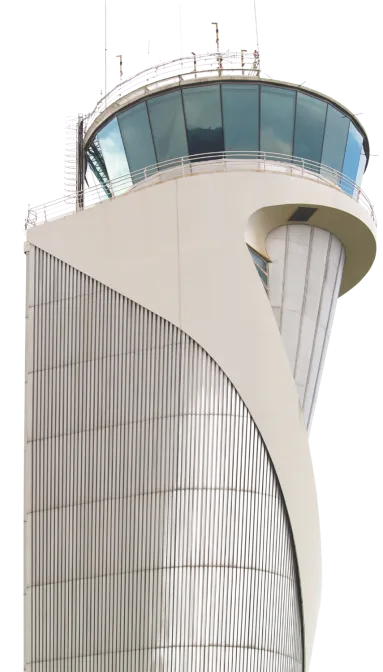
Control Tower (ATCT)
Purpose:
As its name suggests, a control tower is an elevated structure from which airport controllers operate. The people in the control tower have four primary responsibilities. They must:
  • Ensure aircraft are a safe distance apart and in the proper sequence when flying through the airport traffic area or in the traffic pattern.
  • Manage arrivals and departures.
  • Control ground movements of aircraft and ground vehicles.
  • Provide clearances and local weather and airport information to pilots.
Activities:

Observe controllers directing aircraft during takeoffs, landings, and ground movements.

Learn about tower communication protocols (e.g., phonetic alphabet, clearance instructions).

View radar displays, communication consoles, and the panoramic airfield view from the tower.

Terminal Radar Approach Control (TRACON)

Purpose:
More commonly known as “Approach Control” or “Departure Control,” terminal radar control facilities (TRACON) are associated with an airport or group of airports that lie within high-traffic airspace. TRACON controllers provide separation services for aircraft transitioning from an air route traffic control center (ARTCC) and an airport within their airspace or for aircraft operating between airports within their airspace. The actual TRACON facility might not be located in the control tower or even on the airport site.

Activities:

Watch controllers sequencing aircraft for landing and departure using radar screens.

Understand how TRACON coordinates with control towers and ARTCCs.

Air Route Traffic Control Center (ARTCC)

Purpose:
Away from the airspace of a control tower, a pilot may receive assistance from an air route traffic control center, more commonly referred to as the “center.” A controller’s duties are chiefly oriented toward aircraft flying by instruments (instrument flight rules, or IFR) but, as the workload permits, a controller also assists those flying visually. In addition to keeping aircraft a safe distance from one another, controllers monitor aircraft progress over all routes, advise pilots concerning hazardous weather, and sequence traffic into destination airports. Looking much like the approach/ departure facility, air route traffic control centers may be responsible for much larger areas, some extending hundreds of miles from their building.

Activities:

Observe high-altitude radar operations and long-distance pilot communications.

Discuss how ARTCC works with other centers and military facilities for airspace coordination.

Flight Service Station

Purpose:
Provide weather and information services for all pilots. The FSS will also:

  • Accept and close flight plans.
  • Conduct preflight weather briefings.
  • Communicate with VFR pilots en route.
  • Help pilots in distress.
  • Provide weather information.  Monitor air navigation radio aids.
  • Publicize notices to airmen, which update pilots on changes to aeronautical facilities, services, or procedures or notify them of hazards.
  • Work with search-and-rescue groups in locating missing aircraft.
Flight Standards District Office (FSDO)

Purpose:
The Flight Standards District Office (FSDO, pronounced “fiz-doh”) is a field office of the FAA serving the aviation industry and general public on matters relating to certifying and operating airline and general aviation aircraft. Each office serves an assigned geographical area and oversees operations for safety, certification of flight crews and aircraft, accident prevention, investigation, and enforcement.

Activities:

Meet FAA inspectors and learn about their role in ensuring aviation safety.

Explore case studies of inspections or safety issues.

Be Courteous

As always, make sure you thank your hosts for their time, and ideally write them a thank-you note, including what you enjoyed most about the tour.

Be Courteous

As always, make sure you thank your hosts for their time, and ideally write them a thank-you note, including what you enjoyed most about the tour.

Where would you go to learn how the weather is monitored and communicated to pilots?

Did you know that the U.S. military has the largest fleet of aircraft in the world?

Chat Icon
Scoutly Toggle Size Close Chat
New Digital Resource Guide Available

The Family Life Digital Resource Guide was recently published. Check it out today!