
Table of Contents
Table of Contents
Home > Skills > Merit Badges > Digital Resource Guides > Aviation > MB – Aviation – 1.D
Merit Badges > Digital Resource Guides > Aviation > 1.D

Aviation Merit Badge
Digital Resource Guide
Explain the operation of piston, turbine, and jet engines.
Piston Engines
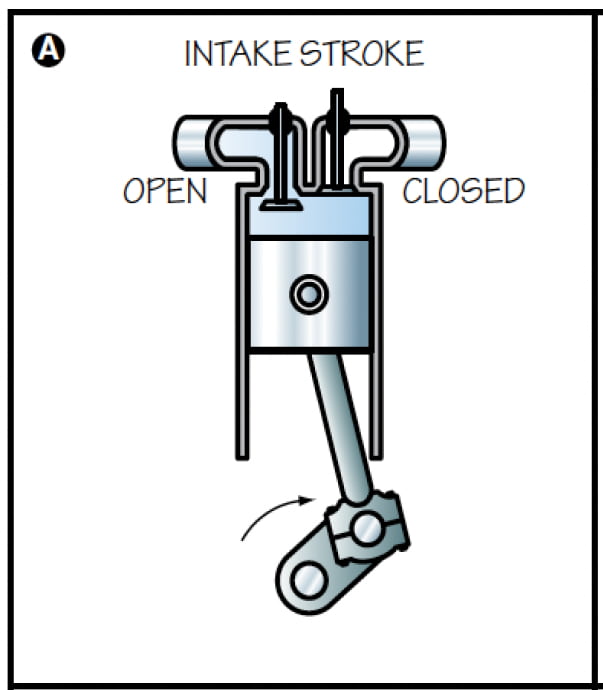
An internal combustion engine (like the one in most cars) is a machine that turns fuel (like gas) into power to make the plane’s propeller move. Here’s how it works:

-
Intake Stroke
First, the engine takes in a mix of air and fuel (like gasoline) through a valve. -
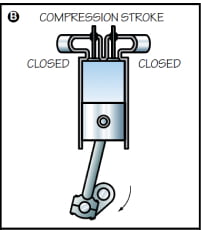
Compression Stroke
The engine has pistons that move up and down inside metal tubes called cylinders. Once the fuel-air mixture is inside the cylinder, the piston moves up and squeezes (compresses) the mixture, making it really dense and ready to explode. -
Power Stroke
Next, the engine has a spark plug. This spark plug creates a tiny spark, which lights the compressed fuel and air. When the fuel explodes, it creates a lot of pressure.
This explosion pushes the piston down really fast. This is where the engine gets its power to turn the propeller(s). -
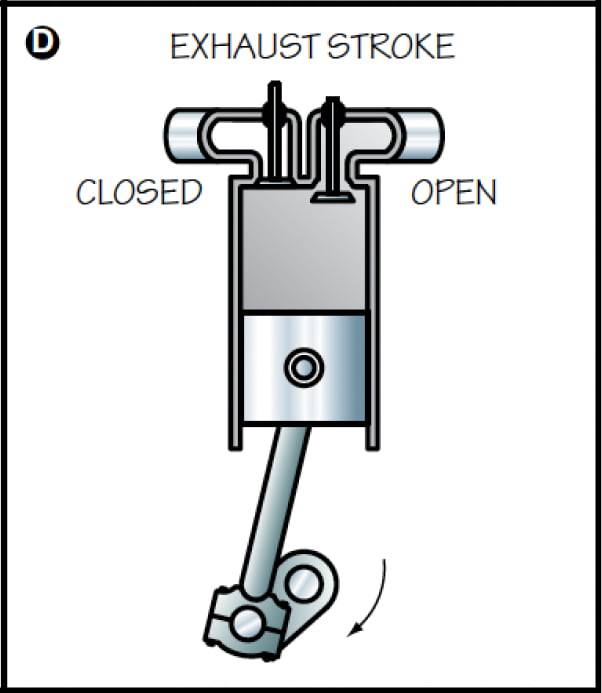
Exhaust Stroke
After the piston is pushed down, the engine needs to get rid of the leftover gases from the explosion. Another valve opens, and the piston moves back up to push the exhaust gases out.
The engine keeps repeating this cycle—sucking in fuel and air, compressing it, exploding it, and then pushing out the exhaust—over and over again very fast. This is what keeps the plane moving!
In short:
The engine burns fuel inside cylinders to make tiny explosions. These explosions push pistons that turn the plane’s propellers. It’s like a series of mini “booms” happening really quickly to keep the engine going.

Check out this video to see a piston engine in action!
Turbine Engines
A turbine engine works a bit differently from an internal combustion engine, but it still uses the same basic idea—turning energy into power to make things move. Here’s how it works:

-
Air Intake
First, the engine pulls in a huge amount of air through the front. This happens because the plane is moving fast through the sky, so air is forced into the engine. -
Compression
Once the air is inside the engine, it passes through a series of spinning fans or compressors. These fans squeeze (compress) the air, making it very dense and ready for the next step. -
Mixing with Fuel
After the air is compressed, it moves into a section of the engine where fuel (usually jet fuel) is injected into the compressed air. The air and fuel mix together and are ready to be ignited. -
Ignition and Combustion
In the combustion chamber, the fuel and compressed air are ignited by spark plugs. When the fuel burns, it creates a lot of hot, high-pressure gas. This is the key part that makes the engine work—this hot gas expands very quickly and creates a lot of energy. -
Turbine (Turning the Power Into Motion)
The high-pressure gas moves through a set of turbines. A turbine is like a giant fan that spins when the hot gas hits it. The spinning turbine is connected to the compressors at the front of the engine, so as it spins, it helps drive the compressors that keep pulling in more air. It's like a cycle where energy from the hot gas keeps things moving. -
Exhaust
After the gas passes through the turbines, it is forced out of the back of the engine at very high speed through a nozzle. This fast-moving exhaust is what creates thrust—the force that pushes the plane forward. The faster the air is pushed out, the faster the plane goes. -
Repeat
The whole process happens over and over again as long as the engine is running, pulling in air, mixing it with fuel, burning it to create hot gas, and using that gas to spin the turbines and produce thrust.
In short:
A turbine engine takes in air, compresses it, mixes it with fuel, burns it to make hot gas, and then uses that gas to spin turbines. The turbines create thrust by pushing air out the back of the engine, making the plane move forward. So, it’s like a continuous cycle of sucking in air, burning fuel, and turning that into a fast-moving exhaust to push the airplane forward.
Check out this video to see a turbine engine in action!
Jet Engines
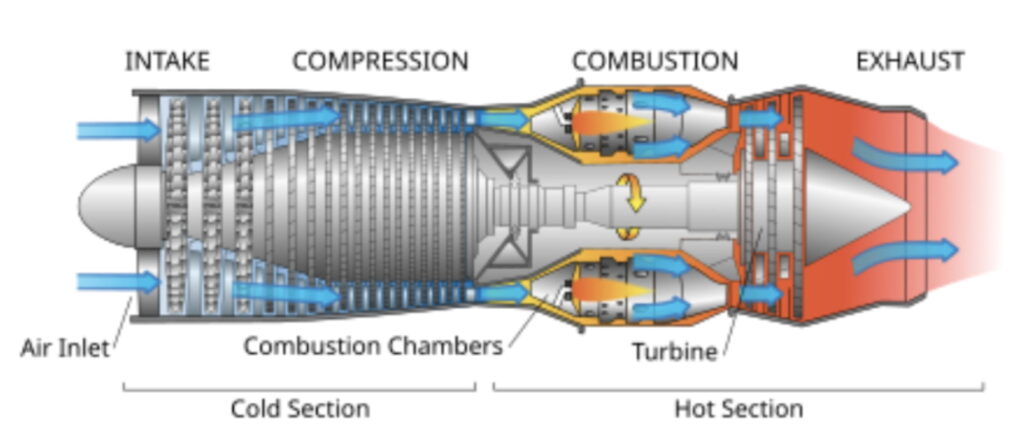
Actually, a jet engine is really just a specific type of turbine engine—specifically, the kind used in airplanes to create the thrust that makes them fly. So the explanation given for a turbine engine applies to most jet engines as well.
But let’s break it down a little more and see what makes a jet engine special.
-
Air Intake
A jet engine starts by pulling in a large amount of air through the front of the engine. This air is sucked in because the airplane is moving so fast through the sky. If you imagine the airplane is like a giant vacuum cleaner, it’s constantly pulling in air. -
Compression
Once the air is inside, it passes through a series of compressor blades. These are fast-spinning fans that squish the air, making it much denser. The air is now packed with more oxygen, which is important for combustion (the burning part). -
Mixing with Fuel
Now, the compressed air moves into the combustion chamber (this is where the "burning" happens). Here, fuel (like jet fuel) is injected into the high-pressure air. This mix of compressed air and fuel is ready to be ignited. -
Ignition and Combustion
In the combustion chamber, the air-fuel mixture is lit on fire by spark plugs or sometimes by heat from the engine itself. When the fuel burns, it creates a lot of heat and high-pressure gas. The burning process makes the air expand really fast—this is a powerful release of energy. -
Turbine
This hot, high-pressure gas moves through a series of turbines. The turbines are special blades that spin when the hot gas hits them. The spinning turbines are connected to the front compressors, so as they turn, they help keep pulling in more air into the engine. -
Exhaust and Thrust
Finally, after the gas passes through the turbines, it moves into the exhaust nozzle at the back of the engine. The gas is forced out at incredibly high speed. This high-speed exhaust creates thrust, which is the pushing force that propels the airplane forward. -
Repeat
The process keeps repeating. The engine continues to suck in air, compress it, mix it with fuel, burn it, spin the turbines, and blast out hot gas to keep the airplane moving.
Key Point About Jet Engines:
Jet engines, whether they are turbofan engines, turbojet engines, or turbo prop engines, all work on this basic idea of using hot, high-pressure gas to spin turbines and create thrust.
A turbofan engine (the kind most commercial planes use) has an extra set of fans at the front of the engine that push even more air around the engine to create even more thrust. These fans make it quieter and more efficient.
Check out this video to see a jet engine in action!

Key Takeaway
As engines increase in power, so too does their complexity (and cost!) Aircraft manufacturers spend a lot of time making sure that they match the right engine with the right airframe to give the pilot the exact performance they need for that specific aircraft.
Key Takeaway
As engines increase in power, so too does their complexity (and cost!) Aircraft manufacturers spend a lot of time making sure that they match the right engine with the right airframe to give the pilot the exact performance they need for that specific aircraft.
Power generates thrust – but thrust is only one of the forces that act on an aircraft in flight. Learn about all four of these forces!