STEM — science, technology, engineering and math — isn’t just something you learn about in school. Eventually, it could become something you do for your career. After all, the number of jobs in STEM-related fields is increasing at a faster rate than non-STEM jobs.
Whether you’re interested in a career in STEM or just want to learn more about a STEM-related subject, Scouting America has multiple merit badges for you.
(While many merit badges contain some elements of STEM, the badges below are almost entirely STEM from start to finish.)
Animal Science: Raising livestock isn’t just a skill. It’s a science. This merit badge gives Scouts an idea of what it takes to care for animals like cattle, horses, sheep, goats, hogs and poultry.
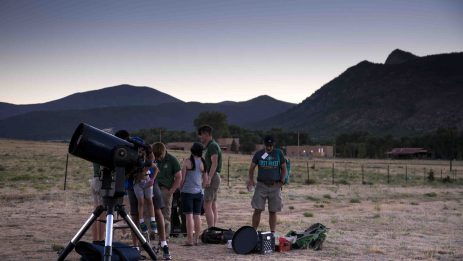
Astronomy: In learning more about the branch of science that deals with celestial objects, space and the physical universe as a whole, Scouts will explore the wonders of all things related to the night sky: the stars, the moon, nebulae, meteors and other planets — both within our solar system, and beyond.
Automotive Maintenance: A lot of engineering goes into making cars fast and reliable. This merit badge teaches Scout about the history of the automobile, and what it takes to keep the newest ones in top condition.
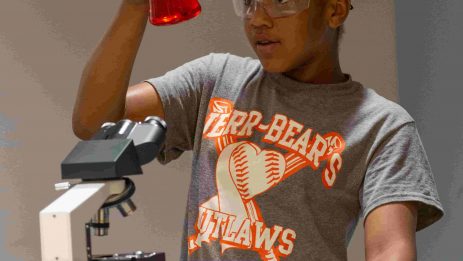
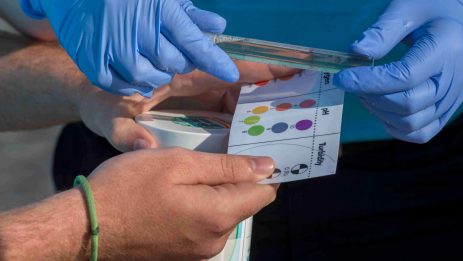
Chemistry: Even if it isn’t your favorite class in school, the Chemistry merit badge provides a fascinating look at the substances that make up our world … and what happens when you put them together!
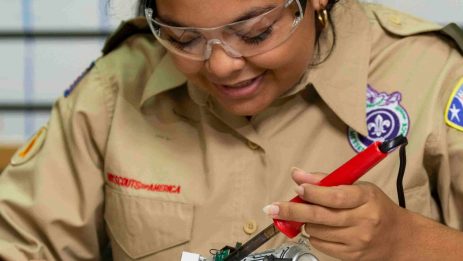
Digital Technology: You use a computer at school, then you come home and use a videogame console, then you message your friends on a phone. This merit badge is all about the relationship between humans and the digital technology that surrounds us.
Engineering: Engineers use science and technology to turn ideas into reality. Scouts use this merit badge to learn how professionals such as civil engineers, software engineers, biomedical engineers and aerospace engineers make it happen.
Environmental Science: This merit badge introduces Scouts to the skills required to be an environmental scientist, a specialist who uses their knowledge of nature to protect the environment.
Geology: A geologist is a scientist who studies the Earth’s physical structure and substance, along with its history. Scouts who work on the Geology merit badge will learn about the tools and skills required to be a geologist.
Nuclear Science: Science has come so far in the last few thousand years that there’s even a field of science that studies atomic nuclei. That’s nuclear science, and in working on this merit badge, Scouts will learn how nuclear scientists study how matter and forces interact.
Plant Science: Without plants, humans and other animals couldn’t exist. The Plant Science merit badge explores the fields of agronomy (the soil), horticulture (gardening) and field botany (the study of the physiology, structure, genetics, distribution and classification of plants).
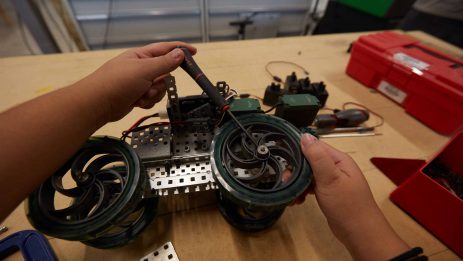
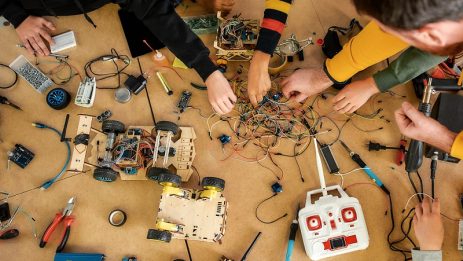
Robotics: Robots are built to do the things that humans can’t — or at least prefer to not — do. From dangerous jobs like deep-sea exploration to boring jobs like putting the same car parts together over and over and over again, robots are everywhere. This merit badge discusses how robots are designed and built, and even offers Scouts the chance to build one of their own.
Space Exploration: Humans first explored space because we were curious. As you’ll learn when you work on this merit badge, we’re now seeing the benefits of satellite imagery and communication satellites, and we’re only just beginning the age of space tourism.