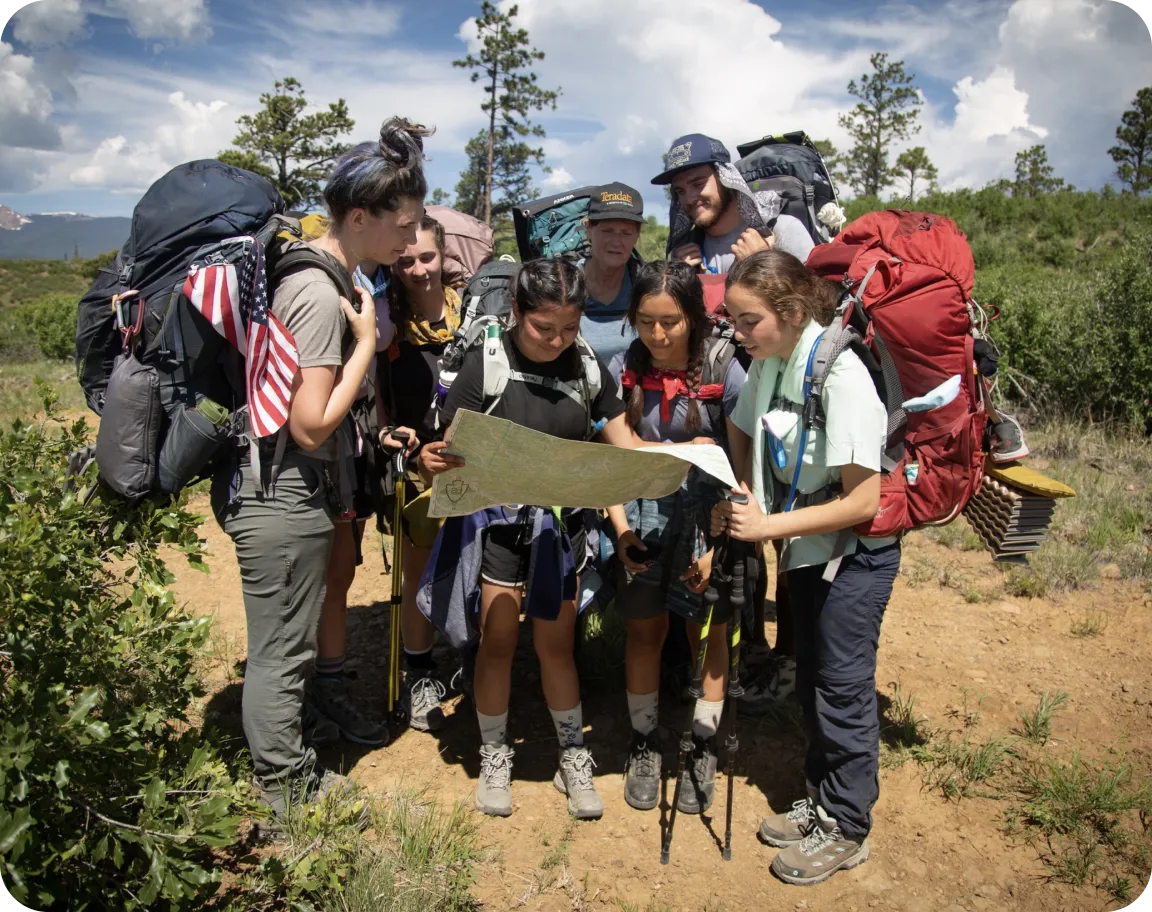
Take four 10-mile hikes and one 20-mile hike, each on a different day, and each of continuous miles. Prepare a written hike plan before each hike and share it with your counselor or a designee for approval before starting the hike. Include map routes, a clothing and equipment list, and a list of items for a trail lunch. You may stop for as many short rest periods as needed, as well as one meal, during each hike, but not for an extended period such as overnight.*
(a) 10-mile hike #1
(b) 10-mile hike #2
(c) 10-mile hike #3
(d) 10-mile hike #4
(e) 20-mile hike
Take four 10-mile hikes and one 20-mile hike, each on a different day, and each of continuous miles. Prepare a written hike plan before each hike and share it with your counselor or a designee for approval before starting the hike. Include map routes, a clothing and equipment list, and a list of items for a trail lunch. You may stop for as many short rest periods as needed, as well as one meal, during each hike, but not for an extended period such as overnight.*
Set an easy pace for your first 10-mile hike. Hike at the pace of your slowest companion so your group stays together. An easy way to do this is to have your slowest hiker be at the front of the group of hikers. Rest when you get tired. Eat when you are hungry, and drink water frequently to stay hydrated. Soon you will know what it feels like to hike for much of a day.
Plan Your Trip
Remember the Five W’s for Planning a Safe Trip!
A trip plan prepares you for the challenges of a hike, a campout, or any other outdoor activity. Write down the five W’s of a trip plan:
The Pre‑Hike Plan helps you get ready for your adventure before you even hit the trail. It guides you to think about what you need to bring, and how to stay safe along the way.
Before setting out on your 20-mile hike, start with a hearty breakfast and hit the trail early to ensure you finish before dark. Careful planning is essential—map your route and note exit points, water sources, phone service areas, ranger stations, and roads. Check the weather forecast and be prepared for unexpected injuries or illness. Pack smart by bringing extra socks, high-energy food for meals and snacks, and plenty of water. Most importantly, keep a positive mindset and enjoy the adventure with your friends as you explore the outdoors.
Reporting Your Hike
After your hike, write a report to show your counselor. Your hiking report can be as simple as a notebook for writing the highlights of each journey.
Where did you go?
What did you take?
Who went with you?
What did you do?
What did you see and hear?
How might you prepare differently for your next hike?
Include a copy of your trip plan and, if you wish, photographs, drawings, and maps.