Scouting America

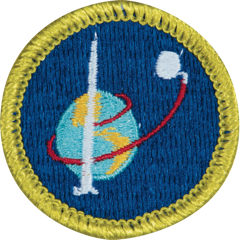
Space Exploration Merit Badge

Space Exploration
Merit Badge

Scouting America Merit Badge Hub

Scouting America
Merit Badge Hub

SpaceExploration

Requirement Updates 2026

This Merit Badge’s Requirements have recently been updated in 2025 Scouting America Requirements (33216). Please read more about “Requirements” on the Merit Badge Hub homepage. The previous version of the Merit Badge requirements can be found in Scoutbook.

Space Exploration Merit Badge Overview

Discover the why and how we explore space. Learn about current and historic space systems along with how they work. Design a future station to survive on other worlds. Gain hands-on experience in building and launching model rockets. Finish your studies learning about the careers that make space exploration possible.
Space-Exploration_merit-badge-overview

Space Exploration Merit Badge Requirements

The previous version of the Merit Badge requirements can be found in Scoutbook

The requirements will be fed dynamically using the scout book integration
NOTE: The official merit badge pamphlets are now free and downloadable HERE or can be purchased at the Scout Shop.
1. Tell the purpose of space exploration and include the following:

2. Design a collector's card, with a picture on the front and information on the back, about your favorite space pioneer. Share your card and discuss four other space pioneers with your counselor.
Resources: Here's How I Make Custom Trading Cards (video)
How to Make Trading Cards By Hand (video)
3. Build, launch, and recover a model rocket. Make a second launch to accomplish a specific objective. Identify and explain the following rocket parts:

Safety Note: Rocket must be built to meet the safety code of the National Association of Rocketry. See the "Model Rocketry" chapter of the Space Exploration merit badge pamphlet.

Alternative Requirement: If local laws prohibit launching model rockets, do the following activity: Make a model of a NASA rocket. Explain the functions of the parts. Give the history of the rocket.

Identify and explain the following rocket parts:
Resources: NASA "Rocket Parts" - Beginner's Guide (website)
National Association of Rocketry Educational Video Series on Model Rocketry (website)
  • (a) Body tube
  • (b) Engine mount
  • (c) Fins
  • (d) Igniter
  • (e) Launch lug
  • (f) Nose cone
  • (g) Payload
  • (h) Recovery system
  • (i) Rocket engine.

4. Discuss and demonstrate each of the following:
Resource: NASA "Basics of Space Flight" (website)

5. Do TWO of the following:
  • (a) Discuss with your counselor a robotic space exploration mission and a historic crewed mission. Tell about each mission's major discoveries, its importance, and what was learned from it about the planets, moons, or regions of space explored.
    Resources: Voyager (video)
    Putting Man on The Moon in 11 Years | The Apollo Program (video)
    NASA SpaceX Crew Dragon Launch (video)
    Mars Perseverance Rover (video)
  • (b) Using articles from the internet, photographs and text, create a blog, website, or slide show about a current planetary mission or use magazine photographs, news clippings, and articles from the internet to make a scrapbook about a current planetary mission.
  • (c) Design a robotic mission to another planet, moon, comet, or asteroid that will return samples of its surface to Earth. Name the planet, moon, comet, or asteroid your spacecraft will visit. Show how your design will cope with the conditions of the environments of the planet, moon, comet, or asteroid.

6. Describe the purpose, operation, and components of ONE of the following:

7. Design an inhabited base located within our solar system, such as Titan, asteroids, or other locations that humans might want to explore in person. Make drawings or a model of your base. In your design, consider and plan for the following:
Resource: How NASA Will Build a City on the Moon (video)

8. Explore careers related to this merit badge. Research one career to learn about the training and education needed, costs, job prospects, salary, job duties, and career advancement. Your research methods may include—with your parent or guardian's permission—an internet or library search, an interview with a professional in the field, or a visit to a location where people in this career work. Discuss with your counselor both your findings and what about this profession might make it an interesting career.

Get the Space Exploration Merit Badge Pamphlet

Merit Badge Pamphlets are now free and publicly available. Note: Always check www.scouting.org/skills/merit-badges/all/ for the latest requirements.

Discover more about "Space Exploration"

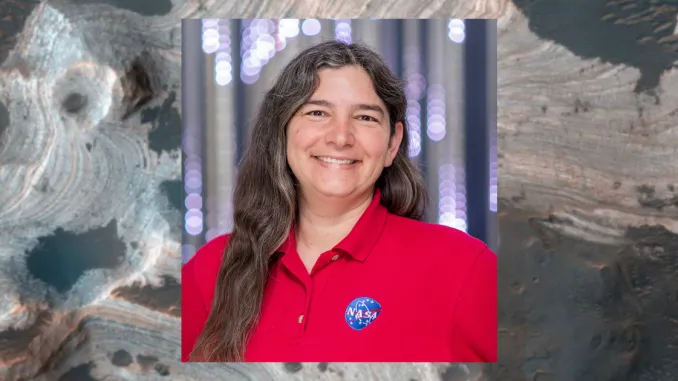
For a full portrait of Rachel Brachman’s passions and proficiencies, don’t look at her LinkedIn. Start with her merit badge counselor registration. Brachman, a public engagement specialist at NASA’s Jet Propulsion Laboratory in California, is a counselor for seven merit badges: Art, Astronomy, Canoeing, Disabilities Awareness, Horsemanship, Inventing and Space Exploration. “Each of these badges reflects a different aspect of my life,” she says. As a NASA specialist at the place where scientists built the Mars rover Curiosity and Saturn probe Cassini, Brachman is a natural to serve as a counselor for the Space Exploration merit badge. “Since I’ve been working at NASA’s Jet Propulsion Laboratory for 17 years, I’ve had a front-row seat during significant moments in space exploration history,” she says. “I love sharing what I’ve learned about Saturn and Mars with Scouts who are earning their Space Exploration merit badge.” Brachman has been an active Scouting volunteer since her son became a Tiger in 2011 and a merit badge counselor since 2017. We asked Brachman for her top advice for merit badge counselors, which you’ll find below. She also shares a lovely free-verse poem about why she takes time to serve in this role. And finally, Brachman tells fellow volunteers about a NASA-sponsored essay contest no space-loving Scout will want to miss. 3 … 2 … 1 … let’s go.

View Related Merit Badges

Chat Icon
Scoutly Toggle Size Close Chat
New Digital Resource Guide Available

The Family Life Digital Resource Guide was recently published. Check it out today!