Chart the organization of your local or state government. Show the top offices and tell whether they are elected or appointed.
State Government
States have full control over local governments, which only have powers granted by the state. State governments follow the federal model with three branches: executive (led by the governor), legislative (usually a Senate and House), and judicial (courts with judges). Nebraska is unique with a single legislative body.
Exploring the Three Branches of Government at the State Level
Key Roles of a State Government
Executive Branch
Implements and enforces state laws.
Leadership:
Governor - Elected
Lieutenant Governor - Elected
Attorney General - Elected
Secretary of State - Elected
Treasury (sometimes called a Comptroller) - Elected
Legislative Branch
Creates state laws.
Elected Representatives in two-house legislature:
Senate - Elected
House of Representatives - Elected
Judicial Branch
Interprets laws and administers justice through the court system.
Leadership:
Judges - Elected or Appointed
What is the difference between an elected State official and an appointed State official?
Elected officials
Elected officials are chosen by citizens through voting. They represent the public and make decisions based on the will of the voters.
Examples of elected officials are the Governor, the Mayor, the city council members, State Senators, House of Representatives, and Attorney General
Appointed officials
Appointed officials are selected by other government officials or bodies. They carry out specific duties based on expertise and are accountable to the appointing entity.
Examples of appointed officials are department heads, judges, and the Secretary of State.
Organization
of a state government
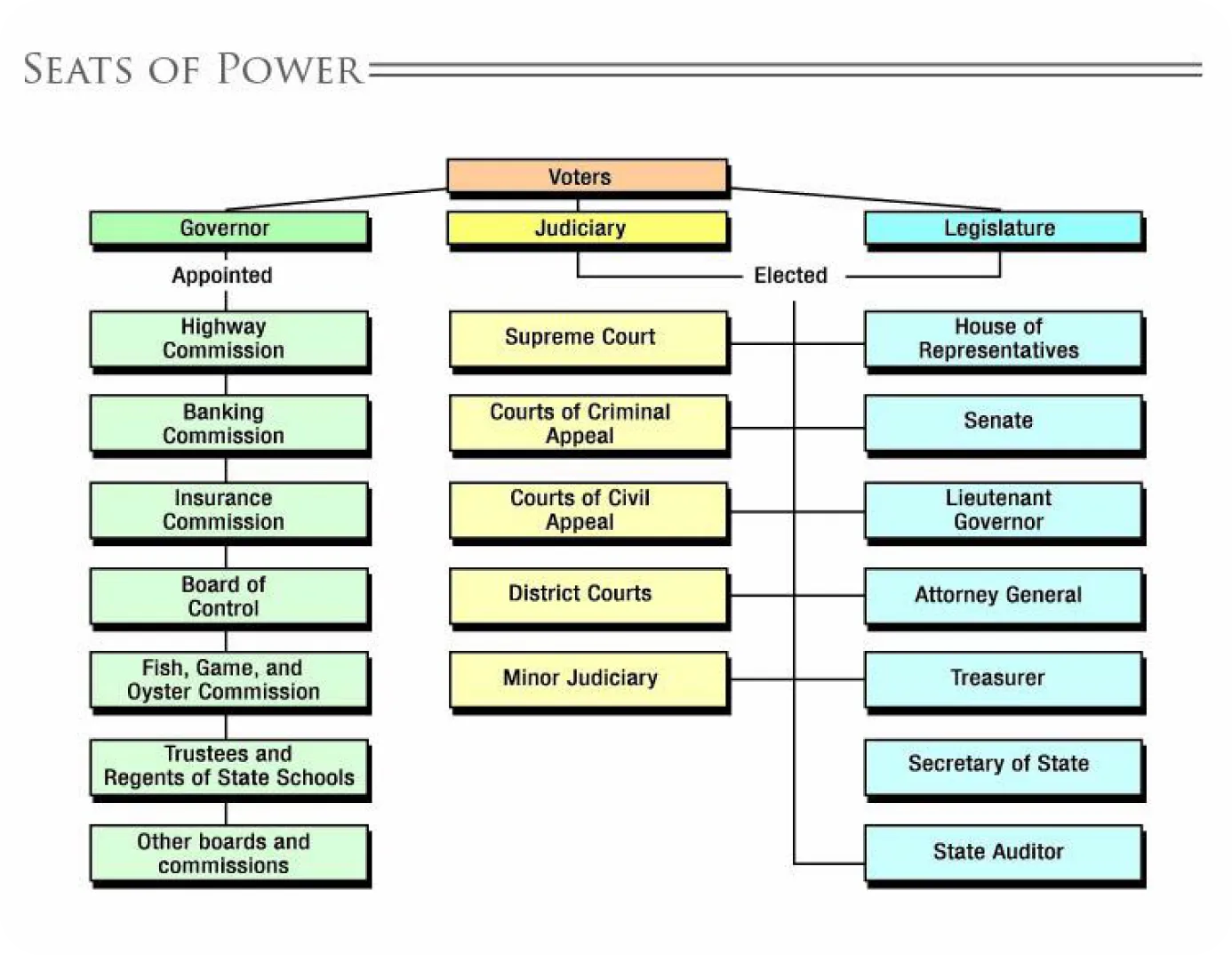
At the federal and state levels, separation of powers is very important and helps ensure that no one branch of government becomes too powerful. It is not as critical at the local level, where most governing bodies perform administrative and legislative duties. Below is a sample chart of state government. Take it a step further by adding the names of the state officials who currently hold positions in each branch.
Helpful Tip
Visit Your Local Government Website
Search for your city, town, or county official website (often “*.gov”)
Sample State Government Chart
State and local government structures can differ from one state to another.
Local Government Structure
No matter where you live, you probably are touched by several layers of local government: city, county, school district, special district, and region. Your family likely pays taxes to more than one of these government entities.
Understanding the Role and Functions of Local Government
Counties
All U.S. states are divided into counties, which are further divided into townships or districts. In 48 states, the county is the largest unit of local government.
County Governments
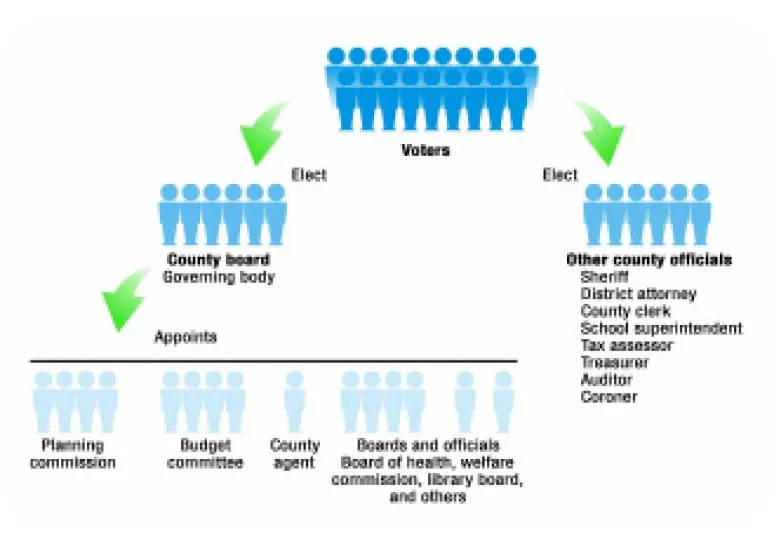
The most common form is the county board, in which citizens elect officials from their township or district to represent them on a board of commissioners (usually with three to seven or more members) or a board of supervisors (typically with 15 to 80 or more members). Board or Commission members share some authority with other elected officials, such as the sheriff, district attorney, county clerk, and coroner, and they may also appoint people to committees and lesser commissions.
Municipalities
Unlike counties, which primarily exist to carry out broad local functions on behalf of the state, municipalities exist at the request of their residents who want more public services. Municipalities (cities, towns, villages, and boroughs) come in all sizes. In urban areas near larger cities, they are generally densely populated, with many cities located next to one another, often referred to as a metroplex, each with its own separate local government.
Mayor-Council Charter
Municipal governments are organized according to their charters and populations. In larger cities, the most widely used form of city government is the strong mayor-council charter. Voters elect a mayor as the chief executive and a council as its legislature. Typically, those cities that have populations below 250,000 people have the Council-Manager form of government.
A Closer Look at the Strong-Mayor Model:
Insights from Former Mayor Julie Daniels
A Closer Look at the Weak-Mayor Model: Insights from Former Mayor Julie Daniels
Council-Manager Government
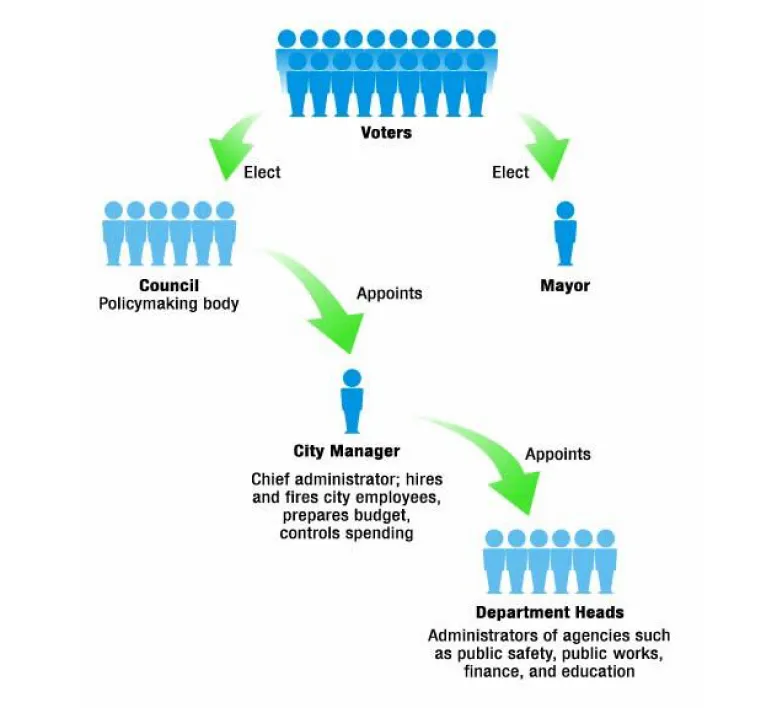
Another form of city government that is gaining wide support is the council-manager government, also called the city manager plan, in which citizens vote for council members in a nonpartisan, at-large election and elect a mayor with limited authority.
A Closer Look at the Council-Manager Government: Insights from Former Mayor Julie Daniels
Commission Form Government
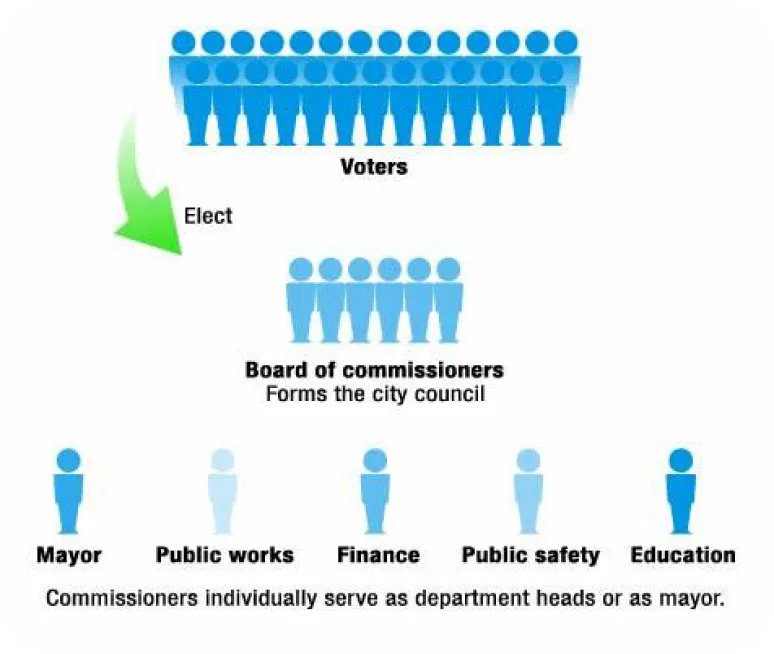
The third and least-used type of municipal government is the commission form. Voters elect three to nine commissioners who act together as a council to pass ordinances and control finances, and individually to head the different departments of city government. The voters or the commissioners may choose one of the commissioners to be mayor. The mayor, who also heads a city department, leads meetings and represents the city at ceremonies, but has no more authority than the other commissioners.
A Closer Look at the Commission Form of Government: Insights from Former
Mayor Julie Daniels
Did You Know:
One of the local governments that is sometimes used is the Special District, which is managed by an elected board. These districts are independent legal entities that provide a specific service. Among these, school districts are the most common application. In most cases, voters elect a board of education (or trustees), and the board’s policies are implemented by an appointed school superintendent.
Now that you know how state and local government is organized,
your next step is to attend an in-person government meeting that has been approved by your counselor.