
Scouting America

2026 March - April Edition

  • All
  • Aquatics
  • Awards
  • Biking
  • Camp Staff
  • Camping
  • Conservation & Environment
  • COPE/Climbing
  • Cub Scouting
  • Fishing
  • National Jamboree
  • National Outdoor Conference
  • NCAP
  • Outdoor Ethics/Leave No Trace
  • Properties
  • Range & Target Activities
  • Safety
  • Shooting Sports
  • Sponsored Content
  • Wheels & Board Sports

Camping

It was a hot June day at the climbing wall at the Philmont Training Center.  The sun was shining brightly, without a cloud in the sky.  The silence at the foot of the wall was anticipatory.  Everyone one was holding their breath watching a determined, sight impaired young girl conquer a very tall climbing wall. 

As Brooklyn neared the top of the wall using the adaptive chair and pulley system, she told those on the ground how beautiful the view of the Tooth of Time was up there.  When she reached the top, Brooklyn rang the bell and amidst the celebration told me I was her hero for being her friend and giving her the best day of her life.  There wasn’t a dry eye at the foot of the tower at that moment.   

If you’d like to experience a moment in time like mine or Brooklyn’s, the Philmont Training Center is the place to be.  Every summer, Philmont welcomes special needs Scouts and their families for a week of fun and exciting outdoor activities called the Zia Experience.  At the same time, Scout leaders from all over the nation join the families in many activities and learn how to bring an adapted outdoor program home to their councils, districts, and units during the Adaptive Special Needs Course.  

In both the Zia Experience and Adaptive Special Needs programs, Scouts and Scouters work together to experience many outdoor activities.  Each year the activities vary.  In the three years I have been a participant, I have experienced tours of Base Camp, riding horses at the stable, shooting BB guns, archery, and slingshots at Rifle and Target Activities, fly fishing, hikes, and some tasty campfire cooking with Philmont rangers and ZIA participants.   

Each morning of the conference begins with excitement over what activity is happening that day.  The Adaptive Special Needs participants join the ZIA participants for half of the day.  Then the ZIA participants go on more adventures with their families and a few rangers while the Adaptive Special Needs participants learn how to have adaptive programs at their home councils from members of the National Special Needs Scouting Committee.   

There is no place more beautiful and sacred in Scouting than Philmont Scout Ranch.  It seems fitting that for many Scouts who struggle with outdoor programs, Philmont is the location they experience the magic of hard work, determination, encouragement, and science.  I have been fortunate enough to watch that magic occur for three summers, and there is nowhere else I’d rather be.  It’s the high point of my summer. 

I highly urge you to attend either the Zia Program or Adaptive Special Needs.  The Scout pride and excitement you gain at these conferences are incredible, as are the friendships you develop.  I will be there this June, and I sure hope that you will be too!  What are you waiting for?  Registration is open so sign up today. 
COPE/Climbing

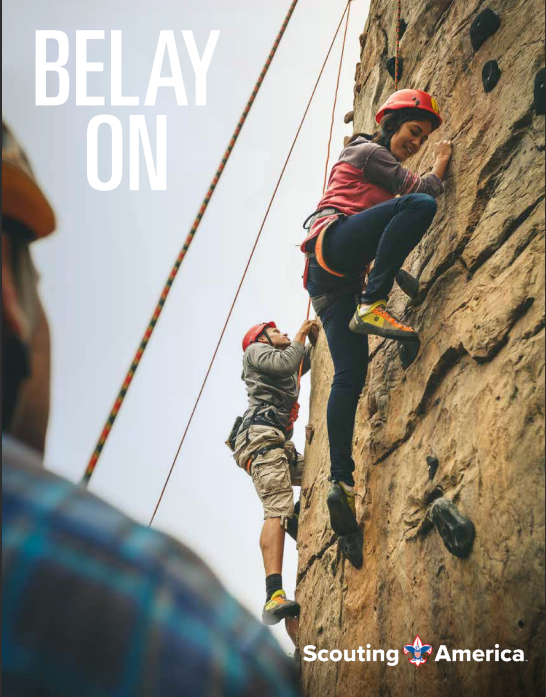
The updated Belay On Manual has been released and is now available on the COPE and Climbing website. This manual serves as the official guide for councils and units in the operation of COPE and Climbing programs, providing procedures, and best practices to support safe, high-quality program delivery.   

If you or your unit are looking to offer climbing or challenge course (COPE) programs this manual gives you the guidelines that you must follow. As you open the guide you will find informatoin about equipment, program planning and all things safety to keep your youth safe in delivering these adventures. The manual is used in conjunction with Climb on Safely training for the program guidance and delivery. 

Thank you to key volunteers from the COPE and Climbing Committee on helping to update this manual. For questions email us at outdoorprograms@scouting.org. 

National Jamboree

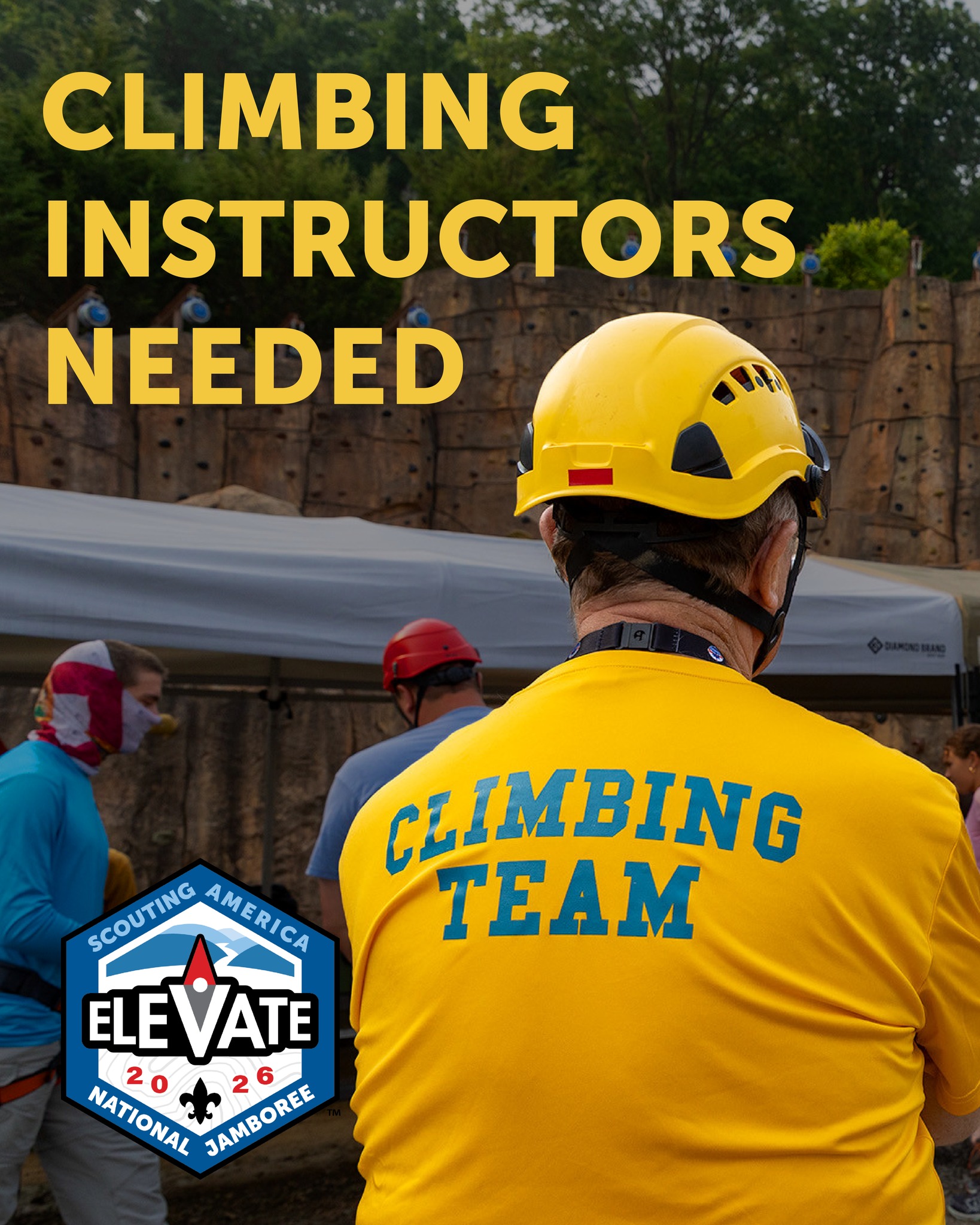
Looking for a way to make your summer unforgettable? The CAST (Climbing Aerial Support Team) Program is calling for enthusiastic camp staff ages 16–29 to join the team at the 2026 National Jamboree! No prior climbing or aerial experience is required—just a passion for Scouting and a willingness to learn. 

This is a volunteer Summit Staff opportunity, offering a free pathway to serve on Jamboree staff while gaining hands-on experience at some of the Summit Bechtel Reserve’s most exciting venues. Approved CAST members will be assigned to: 

  • Aerial Sports (Zip Lines) 
  • Boulder Cove (Climbing Area) 

If you’re ready to help deliver world-class adventure, this is your chance. 
Learn more about the CAST Program HERE.

National Jamboree

Scouting’s biggest celebration is almost here, don’t miss your opportunity to join in. Day Visitor Tickets for the 2026 National Jamboree at the Summit Bechtel Reserve are now on sale! 

Spend a full day exploring thrilling activities, live demonstrations, hands-on exhibits, and the incredible energy of more than 15,000 Scouts and Scouters gathered from across the nation. Bring your family, friends, or your unit and discover the excitement that makes the Jamboree a once-in-a-lifetime experience. 

Day Visitor Dates & Hours 

  • Friday, July 24, 2026 – 10:00 AM–4:00 PM 
  • Saturday, July 25, 2026 – 10:00 AM–4:00 PM 
  • Monday, July 27, 2026 – 10:00 AM–4:00 PM 
  • Tuesday, July 28, 2026 – 10:00 AM–4:00 PM 
  • Wednesday, July 29, 2026 – 10:00 AM–4:00 PM 

Ticket Prices 

  • Ages 14+: $100 
  • Ages 6–13: $75 
  • Ages 5 and under: Free 

Coming Soon: Opening & Closing Show Tickets 

Don’t miss the two signature events of the Jamboree: 

  • Opening Show — Thursday, July 23 at 8:30 PM 
  • Closing Show — Thursday, July 30 at 8:00 PM 

These high-energy celebrations bring the entire Summit to life—stay tuned for ticket availability! 

Purchase Tickets Here 

Camping

When you think of National Camping School (NCS), you may know that it prepares summer camp staff for their leadership roles at camp. While that is true, when your outdoor committee and risk management leaders attend NCS, they can gain helpful skills, insights, and knowledge about how to develop your council outdoor programs to be innovative, safe, and effective.  

Here are a few examples of how the more than forty courses and twelve specialized sections can help: 

  • Idea Sharing and growth: In every course you will share ideas with experienced Scouters from around the country, building your network of folks with area specific knowledge. 
  • Qualified Instructors and Course Materials: Course instructors are deeply experienced outdoor program volunteers and professionals who volunteer their time to help you prepare for your Scouting role. Course materials are developed and regularly updated by our National Outdoor Committees to reflect standardized current practices.  
  • Specific: Training sections offer certification in Aquatics, Trek Leadership, Long Term/Short Term/ Day Camp Leadership, Ecology, Outdoor Skills, COPE and Climbing, and Range and Target Activities. 
  • Outstanding Settings: Our course sites are intentionally selected to showcase quality camping facilities around the country, at times convenient for school and camp schedules. Beyond the course content you will be able to learn from how others have solved facility, program, and business challenges. 

What staff and volunteers from your council should enroll in National Camping School? 

  • Properties and Facilities: Before building that rifle range, dining hall, or showerhouse, NCS will help you understand program needs that affect your plans. 
  • Conservation Planning: Consider how existing advancement and specialized programs can be leveraged to improve your properties. 
  • Strategic Plan: Learn how to evaluate how your properties can/may be used before adding ideas to a strategic plan. 
  • Camping Committee Chair: Learn how to support your long-term, short-term, and day camp programs as they work to meet ever-increasing legal and policy requirements. 
  • Risk Management: Understand how programmatic requirements manage risk and keep your Scouts safe.  Consider how your council is following these requirements, how Risk Managers can help, or whether you should tackle that newly proposed program.  
  • Program Committee: Ecology, Aquatics, Range and Target, Climbing, and Range and Target committee members can all gain program specific insights in our NCS courses. 

There is still room in our 2026 courses. To find your local National Camping School or experience NCS in a different part of the country, go to https://www.scouting.org/outdoor-programs/national-camping-school/  for all the details. Email ncs@scouting.org with questions.  

Is Your Camp a Showcase? Want to share it with the country as an NCS Host Camp? 

Every year we look for showcase camps to host our National Camping Schools. For more information and to apply, click on the “Resources” button at the top of the NCS site OR click here to download the NCS Host Council RFP.

Range & Target Activities

Your unit wants to conduct a Range and Target Activity…How can you help them prepare? 

To begin with we need to ensure the unit is allowed to do the activity. For that we check Scouting America’s Age-Appropriate Guidelines for Scouting Activities, pub. 680-685. Under the “Range & Target Activities” section, the various range activities are listed and check marks are placed in the columns for the program areas that are allowed to do them. Let’s look at the row for “.22 bolt action rifle”. The chart shows us this activity is only allowed for Scouts BSA, Older Scouts BSA, Sea Scouts and Venturers. 

Program Lions Tigers Wolf/Bear Scouts Webelos Arrow of Light Scouts BSA Older Scouts BSA, Sea Scouts, Venturers
.22 Bolt Action Rifle          

(Age Appropriate Guidelines for Scouting Activities may be found here https://filestore.scouting.org/filestore/HealthSafety/pdf/680-685.pdf ) 

Similar to water sports and COPE & climbing which have Safe Swim Defense, Safety Afloat, and Climb on Safely all Scouts BSA troops, Venturing crews, and Sea Scout ships who provide unit-level sponsored/planned range and target activities must have at least one registered unit leader 21+ years of age take the Range Activities SAFEty online training available onmy.scouting.org. This individual must be present at the range during the range and target activity(s). Participating in this training will help ensure a unit understands Scouting America’s range and target activities policies.  The training is available not only to our leaders, but parents as well.  We recommend everyone take the training to understand the safety protocols that are to be in place anytime we are at the range. 

Once we determine the activity is permitted for our group, we would look at Scouting America’s SAFE checklist.   (https://www.scouting.org/health-and-safety/safe/) 

For the purposes of this article, we are going to focus on the ‘S’ in SAFE. 

S stands for Supervision: Youth must be supervised by qualified adults who prioritize safety. 

Supervision requirements for range and target activities can be found in Scouting America’s Range and Target Activities manual, #430-938, pages 9-13. These pages contain charts showing the various requirements necessary to conduct a SAFE range activity. (Manual may be found at https://www.scouting.org/wp-content/uploads/2025/12/430-93825b-Range-and-Target-Activities-Manual-FINAL.pdf) 

Let’s review the chart for the .22 bolt action rifle for a Scout unit activity. 

Program Participants Safety Equipment Minimum program supervision requirements Qualified staff to open the range Minimum number of staff to operate RSO: participant and instructor: participant ratios Additional information
Rifle (Unit Activity) Scouts BSA, Venturing, Sea Scouting Eye and hearing protection NRA Rifle Instructor
AND
NRA Range Safety
Officer
National Camping School Range Activities Director
NRA Rifle Instructor
AND NRA Range Safety Officer

2 people (RSO
and at least one
instructor)

1:8  

Program – Rifle (Unit activity) 

Participants – Scouts BSA, Venturing, Sea Scouts 

Safety Equipment – Eye and hearing protection 

Minimum number of staff to operate – NRA Rifle Instructor AND NRA Range Safety Officer 

Qualified staff to open the range – National Camping School Range Activities Director, NRA Rifle Instructor AND NRA Range Safety Officer 

Minimum number of staff to operate – 2 people (RSO and at least one instructor) 

RSO to Participant and Instructor to Participant ratios – 1:8 

Additional Information – none  

As can be seen, this chart provides a lot of information regarding what is required for a .22 bolt action rifle activity at the unit level.  

We have used the .22 bolt action rifle activity as our example, however the charts on pages 9-13 include the supervision requirements for any activity related to range and target sports at all levels of the program. 

A quick overview of supervision requirements: 

Archery: USA Archery Level 1 (or higher) instructor  

Tomahawk/Knife Throwing: As set in the standard operating procedures of the council 

Atlatl: As set in the standard operating procedures of the council 

Catapult: NRA Range Safety Officer 

Chalk Ball: NRA Range Safety Officer 

BB gun: Scouting America BB gun rangemaster OR NRA rifle instructor 

Pellet gun: NRA rifle instructor  

.22 bolt action rifle: NRA rifle instructor AND NRA range safety officer 

Muzzle loading rifle: NRA CO-OP ML rifle instructor OR NRA ML instructor AND NRA range safety officer 

Shotgun: NRA shotgun instructor AND NRA range safety officer 

Muzzle loading shotgun: NRA CO-OP ML shotgun instructor OR NRA ML instructor AND NRA range safety officer 

The Range and Target Activities manual exists to provide the needed information at the unit, district, council or national levels when planning a range or target activity.  You should always refer to the manual for program guidance.  For information about conducting Range and Target Activities at a camp, please refer to the NCAP standards in addition to the Range and Target Activities Manual.  

Our goal for all Scouting Range and Target Activities is that they are safe and well supervised. The correct supervision will help ensure a safe, fun ‘on target’ event for our participants.   

If you have questions about Range and Target programs, please reach out to us at shootingsports@scouting.org  

NCAP

As summer approaches, preparations for another outstanding camp season are well underway across the country. Each year, Scouting America’s camps work diligently to ensure they are ready to provide safe, high-quality outdoor experiences for Scouts and leaders. One important step in that preparation process is the Declaration of Readiness. 

What Is the Declaration of Readiness? 

NCAP Standard AO-802 states that councils must complete a report showing that they are ready to open and show the Assessment Team Leader that they are meeting the standards.  The Declaration of Readiness confirms that your camp has completed the key preparations required to operate for the upcoming season. It signals that your leadership team has reviewed essential operational areas such as: 

  • Health and safety procedures 
  • Staff preparation and training 
  • Program readiness 
  • Facilities and infrastructure 
  • Compliance with national and local standards 

Submitting this declaration helps ensure that every camp is ready to deliver the safe, fun, and meaningful outdoor programs Scouts expect. 

As you prepare to open camp, staff training is critical. Required tranings for staff are listed in In NCAP Standard SQ-402. One such training is listed as “Understanding and Preventing Peer on Peer Abuse”. You will find this training on My.scouting.org in the trainig area. You will need to search for the title  “Peer on Peer” Training.  Note this is the same training required in the standard.  

For more information on the declaration of readiness and staff training visit the NCAP website at www.scouting.org/ncap 

Camping

Join us at Philmont Scout Ranch for the inaugural Camp Collaborative at Philmont, a week dedicated to strengthening camps and properties across Scouting through practical learning, collaboration, and hands-on training. 

Participants will arrive Sunday, September 27 and depart Friday, October 2, selecting from a variety of courses designed to support the management, stewardship, and operation of Scouting’s camping operations. Many of the sessions will emphasize hands-on learning and practical skills that participants can take back and apply directly at their home camps. 

This gathering is ideal for: 

  • Camp Rangers and Commissioned Scouters seeking annual continuing education 
  • Council staff and volunteers responsible for camp properties and operations 
  • Anyone interested in improving and strengthening their local camping operation 

Courses will include topics such as: 

  • Capital improvements and property planning 
  • Utilizing your camp for year-round and non-Scout business 
  • Ranger continuing education with hands-on training in a variety of disciplines 
  • Risk management and safety outdoors 
  • Conservation and land stewardship 
  • Marketing your camp 
  • Wilderness First Aid Train-the-Trainer 

Registration will start on April 6. Additional details and course selections will be announced soon. 

Come learn new skills, share ideas, and collaborate with others who are committed to strengthening the camps that power Scouting. Time will also be set aside during the week to enjoy Philmont and experience the fall beauty. Questions? Email philmont.trainingcenter@scouting.org 

Camping

“I do find that there’s a fine balance between preparation and seeing what happens naturally.” – Timothee Chalamet 

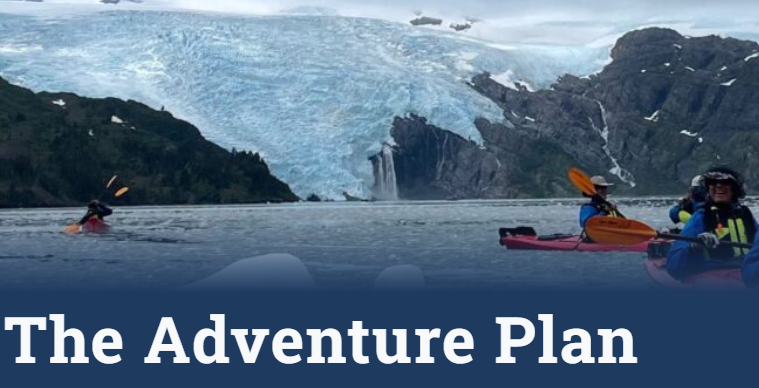
It’s baaack! A Scouting website that helps Scouts and leaders work through the steps needed to plan most outings or adventures. Known as “The Adventure Plan” or TAP, this site is made up of six steps called Waypoints. These Waypoints guide planners through the many details needed to plan a safe and fun outing as they weigh options, consider logistics, create an itinerary, anticipate challenges that may arise, and reflect on how it went.   

Links to Scouting literature throughout the site make finding answers to “how do we…” questions easier to find.  Along with a robust Resources section, this new tool is one every Scout and leader needs in their toolkit. Try it as your team organizes your next outing to help your Scouts “Be Prepared.”  

Check it out at: https://www.scouting.org/outdoor-programs/tap/  

Special thanks to the National Camping and Trekking Committee for their dedicated efforts to create this user-friendly tool.  

See the Most Popular Content!

Subscribe to the Trail to Adventure blog
Email blast!
Subscribe to the Trail to Adventure blog
Email blast!
Chat Icon
Scoutly Toggle Size Close Chat