The Articles of Confederation left most power with the states and created a weak federal government, causing economic problems. Shays’ Rebellion in 1786 exposed these weaknesses and led to the Constitutional Convention. The resulting Constitution contains seven articles that form the framework of the U.S. government: they establish three branches, define state–federal relationships, outline the amendment process, declare the Constitution the supreme law of the land, and describe how it is ratified.
Learn All About the Articles of Confederation
Article I
Establishes the Congress—the legislative, or lawmaking, branch of government that consists of the Senate and the House of Representatives. This article explains the powers and limits of the legislature, the qualifications for office, and the methods of electing representatives. It also places some restrictions on state governments.
Article II
Establishes the executive branch of government and the offices of the president and vice president. This article explains the powers, duties, and limits of the president and the qualifications and methods of electing the president and vice president.
Article III
Establishes the judicial branch of government and the Supreme Court. This article also gives Congress the power to establish other “inferior” courts. The article explains the judicial power of federal courts.
Article IV
Adopted almost exactly from the Articles of Confederation, describes the relationships the states must have with one another, the relationships between the federal government and the state governments, and the procedure for adding states and territories.
Article V
Details the procedures for amending, or making formal changes to, the Constitution.
Article VI
States that the Constitution and all subsequent federal laws are the supreme law of the land. This article requires all state judges to follow the Constitution, even if state laws or constitutions contradict it, and requires all legislative, judicial, and executive officials of the federal and state governments to swear under oath to support the Constitution.
Article VII
Explains how the Constitution shall be ratified (or approved) by the states in order for it to be established.
Jobs that Serve the Nation
Working for the U.S. government offers careers in almost every field you can imagine. These jobs support the country, serve communities, protect the environment, and help keep people safe. Here are some opportunities Scouts may explore:
Administrative & Public Service Jobs
Governors, Senators, House Representatives
President of U.S.
Public Lawyers and Judges
Program analysts
Human resources specialists
Budget and finance staff
Public affairs / communication specialists
These roles help federal offices operate efficiently and support public programs.
Law Enforcement & Public Safety
FBI, DEA, and Homeland Security agents
Park rangers & law enforcement rangers (National Park Service)
U.S. Air Marshal
Firefighters on military bases or national parks
These jobs protect people, enforce laws, and safeguard the United States.
Defense & Military Support
Not requiring military enlistment:
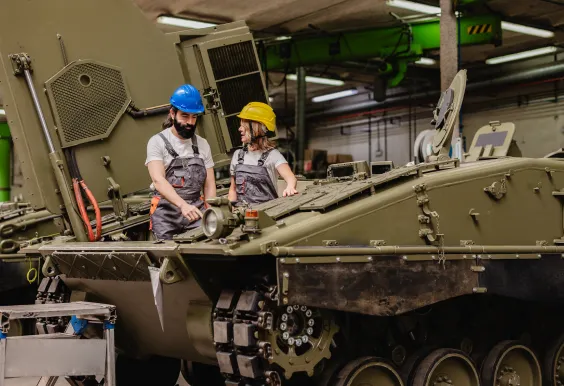
Aircraft mechanics
Logistics specialists
Medical staff on military bases
Civil engineers for military installations
These jobs support the armed forces as civilian employees (DoD civilians).
Environmental & Outdoor Careers
Great for Scouts who love the outdoors:
National Park Service rangers
Wildlife biologists
Foresters / conservation scientists
Environmental technicians
Hydrologists & geologists
These careers focus on protecting natural resources and public lands.
These roles advance innovation, national security, and scientific discovery.
Public Health & Medical Careers
These roles help keep the nation healthy and respond to health emergencies.
Doctors, nurses, EMTs
Public health specialists (CDC, NIH, FDA)
Medical researchers
How Political Parties were Formed
Political parties didn’t exist when the Constitution was written, but debates over ratification led to two groups: Federalists and Anti-Federalists. Federalists, representing wealthy merchants and landowners, supported a strong central government and broad interpretation of the Constitution. Anti-Federalists favored common citizens and strict interpretation and feared losing individual liberties. By 1796, these groups became political parties. Over time, divisions created new parties like Democrats, Whigs, and eventually Republicans. Slavery split parties in the 1850s, leading to the rise of the Republican Party with Lincoln’s election in 1860. Democrats regained strength during the Great Depression with FDR’s New Deal, expanding government roles. Since the late 1960s, power has shifted between parties, with checks and balances ensuring no single party dominates.
Want to Learn More? Watch This Video on How U.S. Political Parties Began
Today’s Democrats and Republicans have their roots in opposite party philosophies. Although the Democrats are direct descendants of Thomas Jefferson’s republican philosophies, they also borrow Federalist ideas about a strong federal government and broad interpretation of the Constitution. Present-day Republicans have taken Jefferson’s views supporting “less government” as their own platform.
Two-Party System
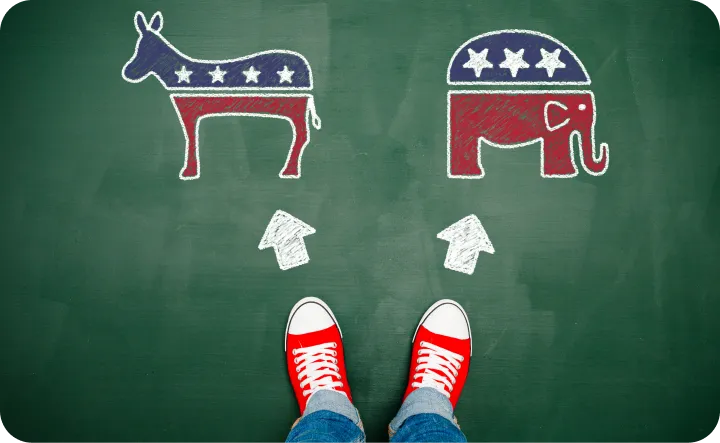
The U.S. has a two-party system, mainly Republicans and Democrats. Political parties aim to win elections and control government to influence laws and policies. When one party controls both Congress and the presidency, it can set the agenda; when power is split, compromise is needed.
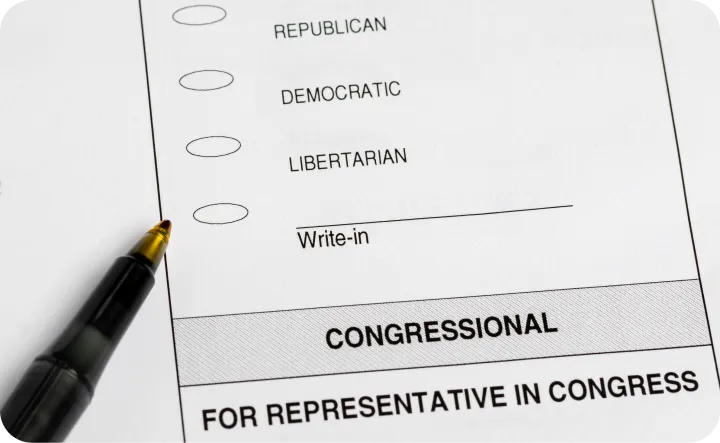
Most elections allow only one winner per office, making third-party candidates less likely to succeed. Major parties also create rules that make it harder for third parties to get on ballots, though they still play a role and can attract large followings.
Minor Parties
A minor party is a cross between a major political party and a special-interest group. It generally forms around an ideology or an issue and then becomes a party to nominate its own candidates for public office. Minor parties are:
Ideological, such as the Libertarian Party
Single-issue, such as the Right to Life Party
Economic protest, such as the Populist Party
Splinter, such as the Progressive Party
Special-Interest Groups
People with similar interests often join together to influence government decisions. These groups focus on specific issues, not on electing candidates. They work to persuade lawmakers to pass laws that support their causes and may back candidates who agree with them.
Examples include business groups, labor unions, professional associations, and organizations that promote certain causes like environmental protection or public safety. Special-interest groups help raise awareness, monitor government actions, and give citizens another way to participate in politics.
Explore These Links to Learn More About Special Interest Groups