


Scouting America

Sports Merit Badge

Sports
Merit Badge

Scouting America Merit Badge Hub

Scouting America
Merit Badge Hub

Sports

Sports Merit Badge Overview

Millions of people participate in sports every year. For some the appeal is the close friendships that come with being part of a team. Some revel in the joy of victory and lessons of defeat. For some, the personal fitness is so important that exercise becomes a daily need. And still others desire the feeling of achievement, that feeling of measurable improvement that comes with dedication to a sport.
Sports_MB-overview

Sports Merit Badge Requirements

The previous version of the Merit Badge requirements can be found in Scoutbook

The requirements will be fed dynamically using the scout book integration 113
NOTE: The activities used to fulfill the requirements for the Sports merit badge may not be used to help fulfill requirements for other merit badges.
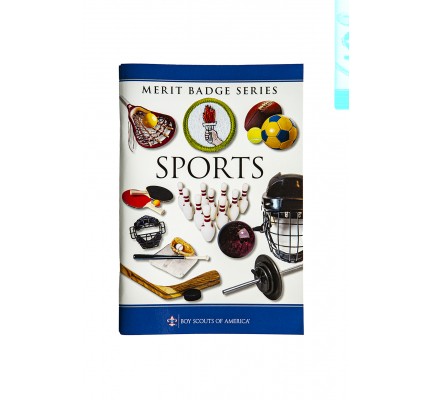
NOTE: The official merit badge pamphlets are now free and downloadable HERE or can be purchased at the Scout Shop.
1. Do the following:
  • (a) Explain to your counselor the most likely risks you may encounter while participating in sports and what you should do to anticipate, help prevent, mitigate, and respond to these risks.
  • (b) Show that you know first aid or understand the treatment for injuries that could occur while participating in sports, including sprains; strains; muscle cramps; contusions; abrasions; blisters; dehydration; heat reactions; fractures; injured teeth; head, neck, and back injuries; and concussions.

2. Explain the following:
  • (a) The importance of the physical exam
  • (b) The importance of maintaining good health habits for life (such as exercising regularly), and how the use of tobacco products, alcohol, and other harmful substances can negatively affect your health and your performance in sports activities
  • (c) The importance of maintaining a healthy diet.

3. Discuss the following:
  • (a) The importance of warming up and cooling down
  • (b) The importance of weight training
  • (c) What an amateur athlete is and the differences between an amateur and a professional athlete
  • (d) The attributes (qualities) of a good sport, the importance of sportsmanship, and the traits of a good team leader and player who exhibits Scout spirit on and off the playing field.

4. Select TWO of the following sports and discuss with your counselor how you will complete the requirements in 5(a) through 5(h) for each sport: badminton, baseball, basketball, bowling, cross-country, diving, field hockey, flag football, flag team, golf, gymnastics, ice hockey, lacrosse, soccer, softball, spirit/cheerleading, swimming, tackle football, table tennis, tennis, track and field, volleyball, water polo, and/or wrestling. Your counselor may approve in advance other recognized sports, but not any sport that is prohibited by Scouting America. The sports you choose must include regular practice sessions and at least four structured, officiated, scored games, meets, or contests against other competitive individuals or organized teams during the period of participation.
5. Do the following:
  • (a) With guidance from your counselor, establish a suitable personal training program that you will follow throughout your competition season (or for three months).
  • (b) Create a chart or other tracking system, and document your training, practice, and development during this time.
  • (c) Demonstrate proper technique to play each sport effectively and avoid injury.
  • (d) List and describe the equipment needed for each sport, including protective equipment and any specialized clothing.
  • (e) List and explain the rules and proper etiquette of each sport.
  • (f) Draw and explain a diagram of the playing area for each sport.
  • (g) Participate in each sport as a competitive individual or as a member of an organized team for one season (or for three months).
  • (h) At the end of the season, share your completed chart with your counselor and discuss how your participation in the sports you chose has affected you mentally and physically.

6. Do ONE of the following:
  • (a) Identify three career opportunities that would use skills and knowledge related to a sport. Pick one and research the training, education, certification requirements, experience, and expenses associated with entering the field. Research the prospects for employment, starting salary, advancement opportunities and career goals associated with this career. Discuss what you learned with your counselor and whether you might be interested in this career.
  • (b) Identify how you might use skills and knowledge related to a sport to pursue a personal hobby and/or healthy lifestyle. Research the additional training required, expenses, and affiliation with organizations that would help you maximize the enjoyment and benefit you might gain from it. Discuss what you learned with your counselor and share what short-term and long-term goals you might have if you pursued this.

Get the Sports Merit Badge Pamphlet

Merit Badge Pamphlets are now free and publicly available. Note: Always check www.scouting.org/skills/merit-badges/all/ for the latest requirements.

Discover more about "Sports"

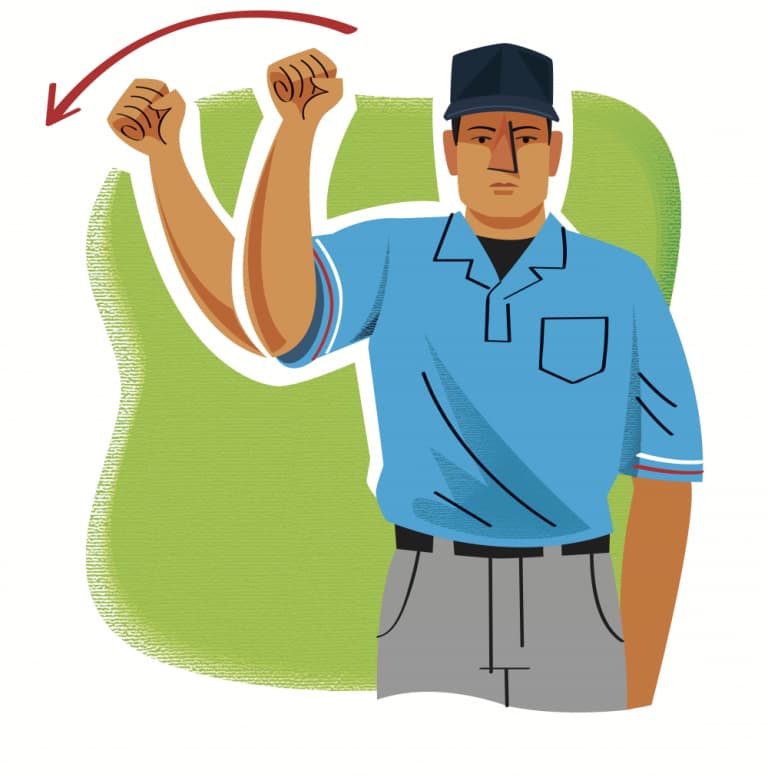
Baseball fans can get loud. Sometimes, they get really loud. That’s why umpires (the officials in baseball) use hand signals. That way, the players, coaches, fans in the stands and fans watching TV all know what’s happening. An umpire’s job is to make sure both teams are playing by the rules. The home-plate umpire is in charge. He makes all the calls at home plate, like balls and strikes. He also wears a mask and other padding to stay safe. The umpires at first base, second base and third base make the calls at their positions and in the outfield. Read on to learn some of the most important umpire signals. Plus, learning these signals will help Webelos fulfill one requirement of the Sportsman elective adventure. Here are the seven most common signals used by baseball umpires: Out/Strike Strikes are called with the right hand. Some umpires point to the side; others make a clenched fist. The “out” call — also a clenched fist — is used after a third strike or when a runner is out before reaching a base. Timeout/Foul Ball Used when a batter hits a foul ball or when play must be paused. Foul Tip Used when a batter swings and just barely tips the ball but the catcher still catches it. Do Not Pitch Used to signal the pitcher to wait before throwing his next pitch. Safe Used when a runner safely reaches any base. Play Ball Used to signal the pitcher that it is OK to throw the pitch. Fair Ball Used when a batter hits a ball that lands in fair ground. This signal can be made with either hand. With these seven signals in mind, you’ll understand the most common calls in baseball. But there are other signals umpires use during a game to communicate with players, coaches, scorekeepers and other umpires. Help us keep this list going by describing other signals an umpire uses by commenting below.
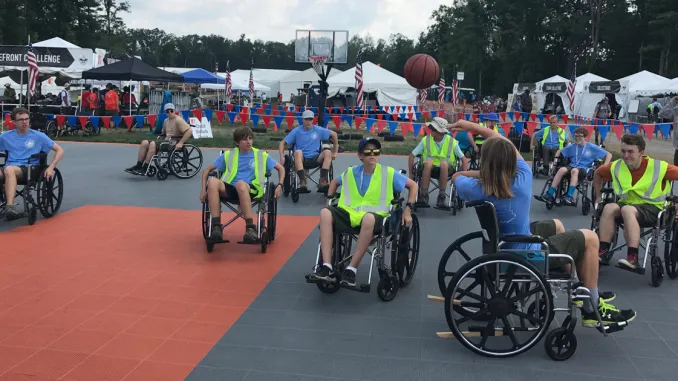
Madison Trimble is slowly but confidently making her way around a simple maze of PVC pipes laid out on the ground. Every few steps, her feet or her bright yellow cane bumps against a pipe, and she shifts her direction slightly. When she gets to the end, Madison, an 18-year-old Venturer from Crew 5275C of the Alamo Area Council, takes off the blindfold. She looks behind her. “That was hard!” she says. “You have to use your other senses, like hearing and feel.” That’s exactly the point of the disAbilities Awareness Challenge area at the 2017 National Jamboree. Venturers and Scouts experience the challenges faced by individuals with disabilities or special needs.

View Related Merit Badges

Chat Icon
Scoutly Toggle Size Close Chat
New Digital Resource Guide Available

The Family Life Digital Resource Guide was recently published. Check it out today!