Scouting America

Competitive Gaming
Test Lab

Competitive Gaming

NOTICE

These test lab requirements are available for Scouts until June 1, 2026. At that time, these requirements will disappear and the surveys will be closed. Learn more About the Test Lab.

Competitive Gaming Overview

Where passion for gaming meets leadership, learning, and the future of technology.


The Competitive Gaming  Badge introduces Scouts to one of the fastest-growing industries in the world—esports and modern gaming—while reinforcing the values of the Scout Oath and Law in digital spaces. This badge blends fun, education, personal growth, and real-world career exploration, empowering Scouts to become responsible digital citizens and informed participants in today’s gaming culture.
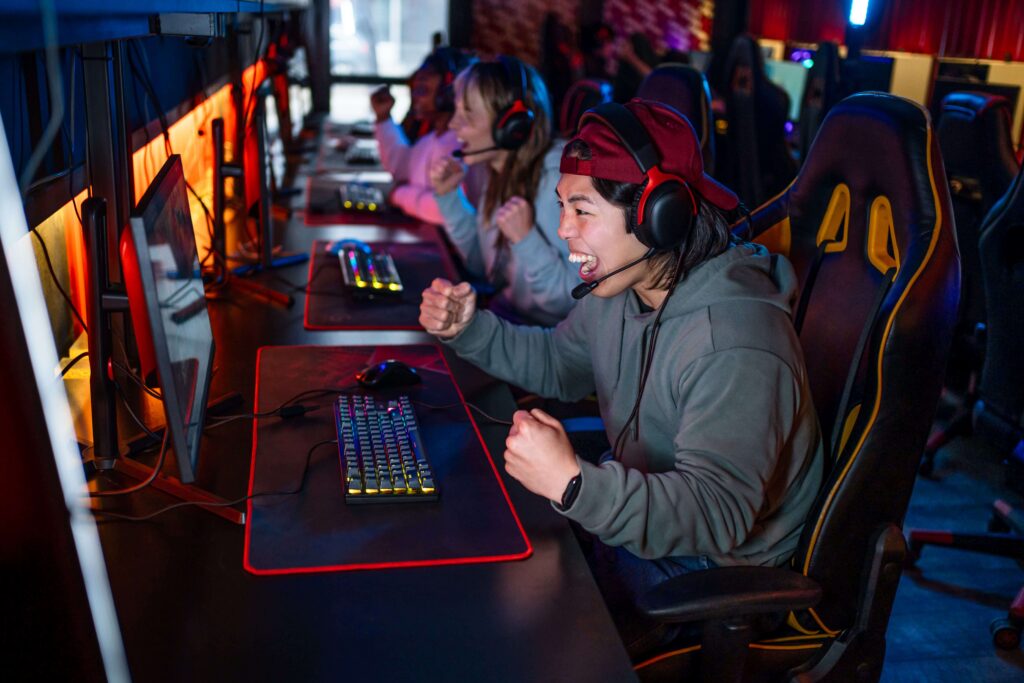
Competitive Gaming REQUIREMENTS

Competitive Gaming
REQUIREMENTS

1. History of Gaming. Do the following:

2. Living the Scout Oath and Law Online. Do the following:

3. Gamer Health and Balance. Do the following:

4. Gamer Safety and Community Connection. Do the following:

  • (a) Explain the benefits and risks of gaming online.
    The Real Benefits of Video Games
    Negative Effects of Video Games
  • (b) Research and list ten ways to stay safe when playing video games online.
    Online safety issues
    Gaming Safety
  • (c) Play one of your favorite games with your parent or guardian for at least 30 minutes. Demonstrate how to use privacy and safety settings, explain what you enjoy about the game, and let them play for part of the session.
    Online Gaming Safety Settings
  • (d) Play an online or local multiplayer game with another Scout, friend, or community member in a cooperative or team-based setting. The match may be casual or competitive. During play, demonstrate positive communication, teamwork, and sportsmanship. Afterward, review the experience with your counselor and describe how cooperation and communication influenced your team’s performance and overall enjoyment of the game.

5. Technology in Competitive Gaming. Do the following:

  • (a) Explain the difference between console gaming and PC gaming. List the advantages and disadvantages of each.
    Console vs. PC Gaming: Which Is Better?
  • (b) Play the same game on at least two different platforms. Describe the similarities and differences in gameplay and performance.
  • (c) Visit a PC builder website such as PCPartPicker or Micro Center. Design your ideal gaming PC and create a parts list that includes: central processing unit (CPU), motherboard, random access memory (RAM), hard drive, power supply, graphics card, fans, case. Discuss your selections with your counselor.
    PCPartPicker
    Micro Center

6. Leadership and Service in Competitive Gaming. Do ONE of the following:

  • (a) Teach your troop, patrol, or a group of younger Scouts or family members about online gaming safety or digital citizenship.
  • (b) Attend or view a live-streamed esports event online, such as a professional tournament, collegiate match, or school-level competition. Take notes on how the broadcast team presents the event, how players communicate, and how the audience interacts digitally. Share with your merit badge counselor what you learned about the structure and presentation of online esports competition.
  • (c) Attend an esports tournament, convention, or community event that includes a competitive gaming activity or demonstration. Attend with another Scout, troop member, or family member. Afterward, share with your merit badge counselor what you learned about the atmosphere of live esports events and how the experience changed your understanding of playing games competitively in front of an audience.

7. Exploring Professions in the Competitive Gaming Industry. Do the following:

  • (a) Research two colleges that offer varsity esports programs. Record the following information for each: availability and amount of gaming scholarships, offered gaming or IT-related degrees, games played by the esports team, league or association in which the team competes.
    NACE School Directory
  • (b) Research three gaming-adjacent careers that support or connect to the esports industry but are not esports athlete roles. Examples may include: game designer or developer, shoutcaster or broadcast producer, data analyst or statistician, marketing or event coordinator, IT or network support specialist. For each career, identify the main responsibilities, education or training requirements, and how the role contributes to the success of the gaming or esports ecosystem.
    100 Jobs in Esports
    Hitmarker
    Careers in Esports
  • (c) Visit the “Careers” or “Jobs” page of a major game publisher (such as Blizzard, Riot, Epic or Nintendo). Choose three jobs that interest you. For each, identify the required education, skills, and experience.
    Careers at Blizzard Entertainment
    Riot Games – Work With Us
    Epic Games Careers, Jobs and Employment Opportunity
    Careers at Nintendo of America

8. Complete the survey below to complete the test lab requirements

About The Test Lab

Scouts can complete these requirements in order to provide feedback and receive a certificate

You decide if this activity becomes an official Merit Badge of Scouting America.  By filling out the survey, you vote for or against this becoming a Merit Badge.  You can also suggest changes to make the merit badge more engaging.  The fate of this potential merit badge rests in your hands.  Come back and complete the survey after you finish the requirements to make your voice heard and to get your certificate of completion.


Chat Icon
Scoutly Toggle Size Close Chat
New Digital Resource Guide Available

Digital resource guides for Family Life, Hiking, and Communication are now available. Check them out today!